
In 2016, Niantic, Inc. released Pokémon Go, a location-based augmented reality game where every user plays on the same virtual map. And notably, any user could place down “lures,” virtual points of interest that corresponded to real life locations, but other users could only use the lure when within a few meters.
This aspect of the game raised serious concerns over user safety and location privacy — users who were primarily children were rewarded for traveling to lures placed in sketchy locations by anonymous users. The “lures” from Pokémon Go were, ironically, being used as lures to attract the game’s young playerbase.
Niantic, Inc.’s extremely popular game was one of the first major applications to implement a location sharing system, but it also raised concerns about the dangers of users blurring the lines between online presence and physical location.
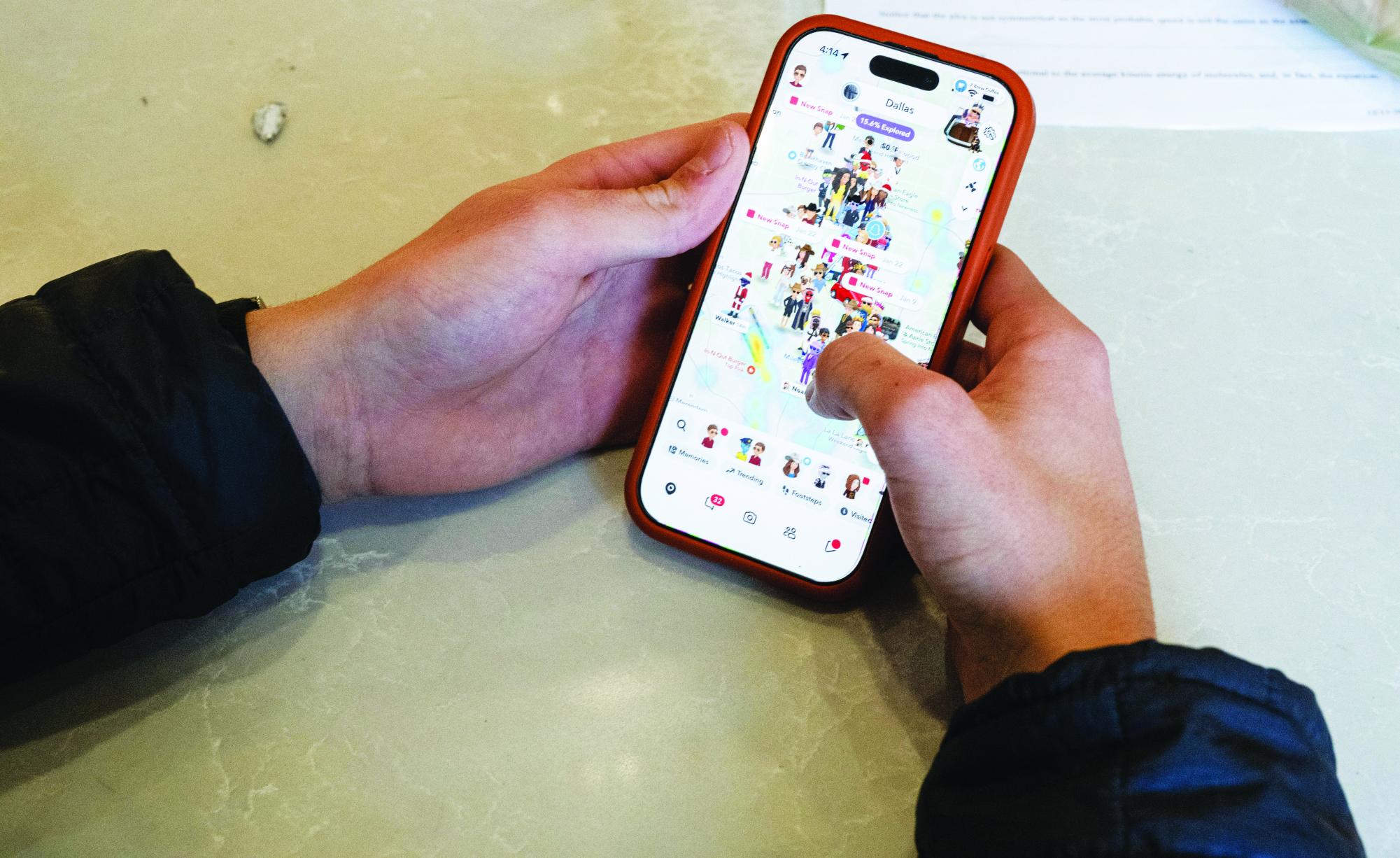
Specifically looking at modern applications, Snapchat has features where location can be shared both publicly and among friends. Life360 is another common app used mainly for location sharing among families Both applications have their own benefits, especially for coordinating events or ensuring a child’s safety.
“If you’re coordinating between a parent, another parent and a nanny, they might want to be able to locate the child,” Upper School Counselor Mary Bonsu said. “Or if you’re just concerned about safety issues around your child in general, knowing where they are actually helps them be safer.”
However, these location sharing applications like Snapchat can come with their own downsides; namely, users might be too watchful over their friends’ locations, leading to a fear of missing out on group events.
“If two or three people decided to get together, but a fourth person who very well thinks that they should be part of whatever this plan was, then that’s FOMO (fear of missing out),” Bonsu said. “It can make it very hard for folks to focus on some of their other goals and desires.”
For users, there’s an overwhelming amount of data available at their fingertips, especially as more apps start to integrate other peoples’ location information; these applications, such as Snapchat, are continually evolving and shifting to fit its users’ needs.
“The reality is, if it comes to user consumption from the companies, the more you can get them to spend time on your application, the better,” computer science teacher Ivann Grande said. “Snapchat started as just literally an image sharing app. You take a picture, send it to someone else or to your friends, and that’s it. Now we’re to the point where even Snapchat has an integrated map feature where you can share your location. Was that truly necessary from a user standpoint?”
Aside from the safety concerns and doubts regarding location sharing, there’s also the factor that the online world is increasingly extracting more information and data from users, and location data seems to play a part.
One noteworthy example is Google Maps. The app can tell where congestion is because it aggregates the location data retrieved by pinging the location of phones, a feature that turns on once the user allows Google Maps to use their location.
According to Apple’s Location Services & Privacy: “While you are in transit (for example, walking or driving,) your iPhone will periodically send GPS data, travel speed and direction and barometric pressure information in an anonymous and encrypted form to Apple to be used for augmenting crowd-sourced road traffic.”
Google Maps is an example of how much a user’s information is used on a daily basis. Between users voluntarily sharing their location and applications using location data, physical location is becoming a more and more common feature of online privacy, and companies can profit off of it.
Waze, a navigation and traffic app, is an example of a company that utilizes user data. Users report police cars, traffic jams and car crashes.
“Waze is actually the one that benefits because you’re providing data for them,” Grande said. “See, Waze doesn’t have to set up posts on the street, cameras or whatever the case to say there’s an accident here. Instead, they let the user send the information in.”
Ultimately, the unknowns and dangers of location sharing all circle back to digital privacy. The Computer Science Department recognizes the importance of digital privacy and teaches students what the implications of each application are.
“Luckily, here at St. Mark’s, we’re pretty driven to make sure we hammer in the idea of digital citizenship when it comes to students,” Grande said. “Starting as early as lower school, even in middle school, we still cover that stuff more specifically because the digital age is getting so complex.”