
According to WIRED, automakers have promised automated vehicles since 1939. Since cars began to be mass produced in the United States, engineers have envisioned an innovative future where transportation is automated.
Today, automated cars such as Waymo are becoming commonplace in Dallas, making a dream from over 80 years ago turned into reality.
“From an engineering standpoint, I think it’s really cool,” engineering teacher Kevin Fine said. “It’s pushing the limits of technology and computing and sensors and putting all of those things together to make a very complicated application in the real world.”
Sophomore Hunter Dorrill, Programming Lead for the FIRST Tech Challenge Team, has closely followed the rollout of self-driving vehicles.
“Just by looking at a Waymo, you can see they have LiDAR sensors all over them,” Dorrill said. “LiDAR sensors are like radars, but it uses pulses of light, which allows it to see through fog or dust and pretty much see in pitch darkness.”
Despite the advances in technology, autonomous vehicles still struggle with what experts call “edge cases.” Many of these are unlikely to occur on a daily basis but in rather unexpected circumstances in which human drivers would have to think critically.
“The majority of problems that you see come from edge cases, especially interactions with humans outside of the vehicle,” Dorrill said. “Waymos can fail to respond to hand signals from construction workers. They’re not able to handle being pulled over by police.”
One issue stands out as more serious. Waymos consistently fail to stop behind school buses offloading children. The company released a software update claiming to remedy the issue, but Waymos continue to accelerate past stopped school buses. Thankfully, no children have been harmed yet.
Waymos also aren’t as versatile as traditional ride share apps. While Uber also offers UberEats, Waymo has no equivalent food delivery service. Waymos have clear limitations at jobs that require human judgment.
“Waymos aren’t able to nondestructively go into a restaurant and pick up food,” Dorrill said. “Also, Waymos are not able to assist people in loading their luggage. Some riders like the extra service offered by a human driver, but most like being alone like in a Waymo.”
As technology continues to progress in other fields apart from transportation, Fine sees how many everyday activities are beginning to change. He believes that although this helps humanity move forward, there are still some downsides to the automation of many fields.
“I think when writing comes about, and then typing, and then computers, there’s always this moment that changes the way things are done,” Fine said. “And while it makes it more efficient to get things done, you lose some previous skills.”
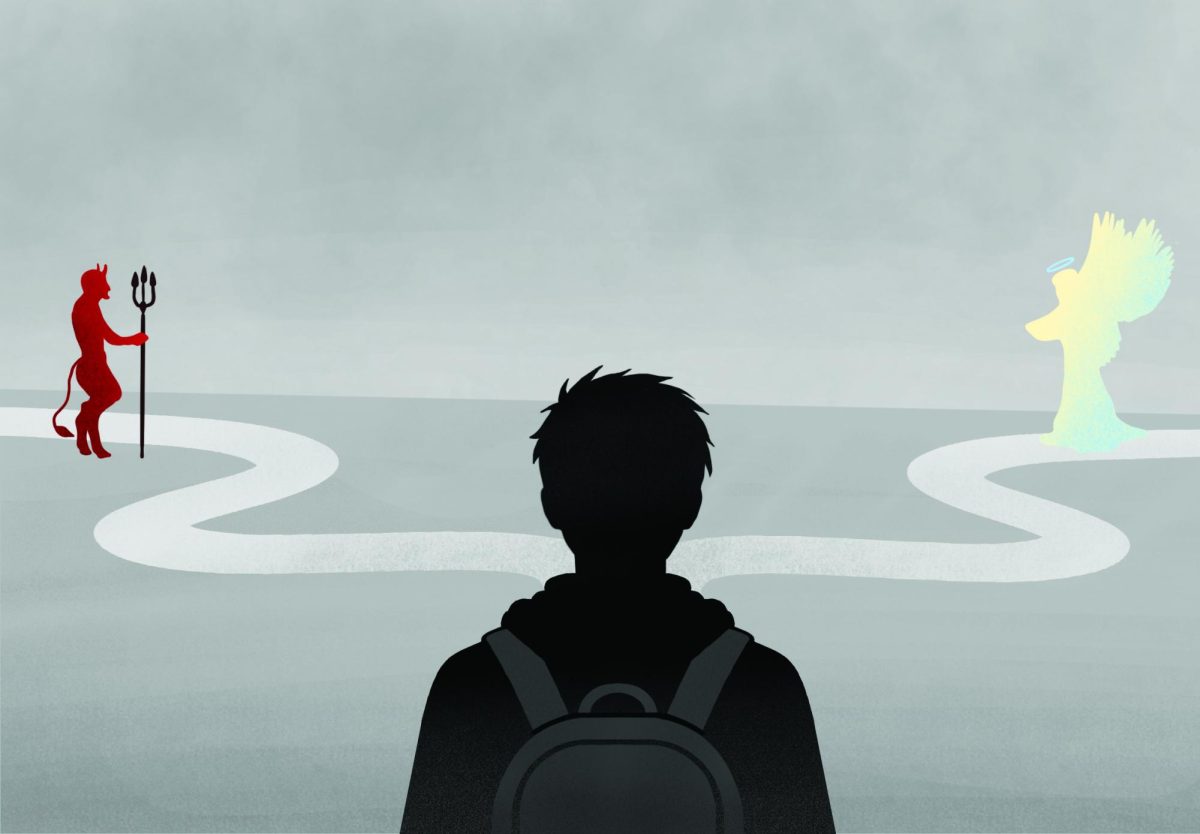
The fact that tasks are so efficient nowadays makes him believe that technology could contribute to the creation of a culture of laziness — one that defaults to shortcuts before critical thinking.
“Humans are potentially giving up more skills in order to use these devices, and as an educational institution like here in St. Mark’s, and as a teacher, that’s something that I think about a lot,” Fine said. “I want my students to be able to operate in the new world, but I also want students to leave here with as many skills in their brain as possible. Because at the end of the day, that’s all you’ve really got, where you can get in your brain.”
However, when used correctly, technology still proves to be versatile and helpful in many fields.
For Fine, AI and the internet can help him improve his teaching, and he believes that it can also help students as well if used sparingly. Still, Fine does not want convenience to turn into laziness as technology can help people avoid putting in more effort into everyday ordeals.
“I sometimes use AI as a tutor to help teach me things, and in that case, I’m actively using it to learn which replaces the role of maybe a textbook or another human being who could help me to teach,” Fine said. “So there’s a convenience factor there, but I’m using it to learn. So I feel like that’s a case where I feel pretty positive about the application of the technology.”
Still, Fine believes that there needs to be some sort of moderation for the use of technology so as not to lose the crucial skills that humanity has taken for granted.
“I think one place to start is to be a little bit conservative about the adoption of technology because there are skills that we as a society have decided that are important and have been important to us for decades, if not hundreds of years, and continue to develop those skills at the same time,” Fine said.