Forty years ago, on Jan. 28, 1986, Headmaster David V. Hicks delivered two crucial announcements to the student body, announcements that Ken Owens ’89, Cecil H. and Ida Green Master Teaching Chair, remembers clearly.
The first was that the water line to the campus had broken. Without water, all of the fountains and toilets stopped working, and students were to be released early. The students, including Owens, cheered at the announcement.
The second announcement, however, was that the Challenger Space Shuttle had caught fire and exploded, leaving everybody onboard dead.
“We all walked out of there utterly silent,” Owens said.
The Challenger had already been launched nine times before, but this time in particular, NASA’s Teacher in Space Project introduced a special member to the crew: Christa McAuliffe, a teacher from New Hampshire.
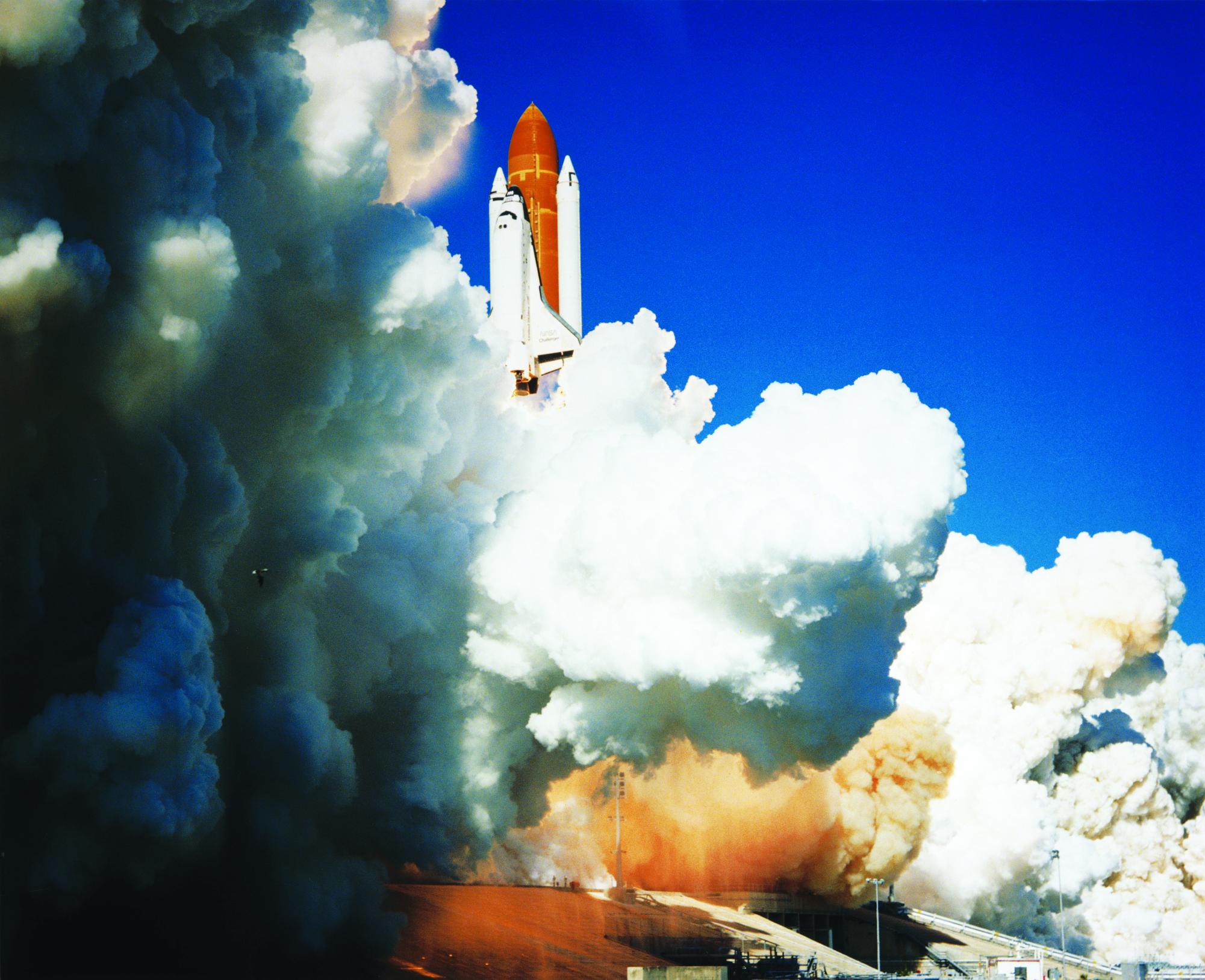
This addition piqued the interest of many students and schoolteachers, and at around noon, millions nationwide watched as the space shuttle splintered off into two plumes of smoke 73 seconds after the launch at 11:38 a.m.
“Some (astronauts) probably were knocked unconscious, but they probably weren’t all dead immediately,” science teacher and Planetarium Director Michael Lane said. “There was just absolutely no way they could escape; there’s no escape mechanism. They just fell to their death and hit the ocean at about 200 Gs.”
The Challenger explosion shocked the American population; children and adults worldwide watched the broadcast deaths of seven to-be astronauts.
“You did not show people dying on TV, like on the news,” Lane said. “If someone got shot, they wouldn’t show it. You don’t show death on TV. And there are old Hollywood movies, but they wouldn’t show blood, of course. (If) they get shot, they would just fall to the ground.”
The mechanical cause of the disaster was with the O-rings sealing the fuel tanks together. On the morning of the launch, the weather temperature was 36 degrees Fahrenheit, much lower than the minimum launch temperature of 53 degrees. Because of the cold, the rubber O-rings contracted and didn’t seal properly, allowing hot gases to escape from the rocket booster.
“That hot gas started to melt the strut (supporting the booster and fuel tank),” Lane said. “With that strut not there, the smaller rocket booster tilted and then rammed into the orange external tank full of liquid hydrogen and oxygen and kaboom, there was a ginormous explosion.”
NASA first introduced their Space Shuttle Program in 1972, and by 1986 it was up to tempo. They had six shuttles including Challenger and were launching a shuttle every two weeks. With this rapid schedule, there was a pressure to stick to the launch schedule — and the pressure to stick to schedule was what ultimately caused the Challenger to fail.
“The company who built the boosters, Morton Thiokol, told NASA via call that if it gets too cold, the seals between segments are no longer tight and will no longer guarantee that the boosters will maintain integrity,” Owens said. “Some people at NASA said they shouldn’t launch, but the overriding consensus was that they should.”
In fact, it wasn’t just anybody who disagreed with the launch — the Morton Thiokol onsite representatives themselves voiced their disagreement to the launching of the spacecraft, citing a lack of testing and preparation. However, one of the NASA project managers pushed back against the engineers’ judgement, deeming the O-ring as safe enough to launch.
“The representative knew that this was risky, and he said, ‘I’m not going to sign off on this,’” Lane said. “‘You can’t launch it because I’m not going to sign off on this. It’s too dangerous.’ But that guy who was at NASA was in charge and put pressure on the vice presidents at (Morton Thiokol). ”
The Challenger disaster was a product of unfortunate timing, rough preparation and corporate disagreement — all of which could have been prevented. So, in response to the disaster, NASA made both mechanical and technical changes to the shuttle program.
“They redesigned everything — the solid rocket boosters, the O rings, the joints,” Lane said. “They also created this safety board, but it was criticized because the Safety Board for all of NASA’s launches was NASA employees themselves and people wanted a separate board.”