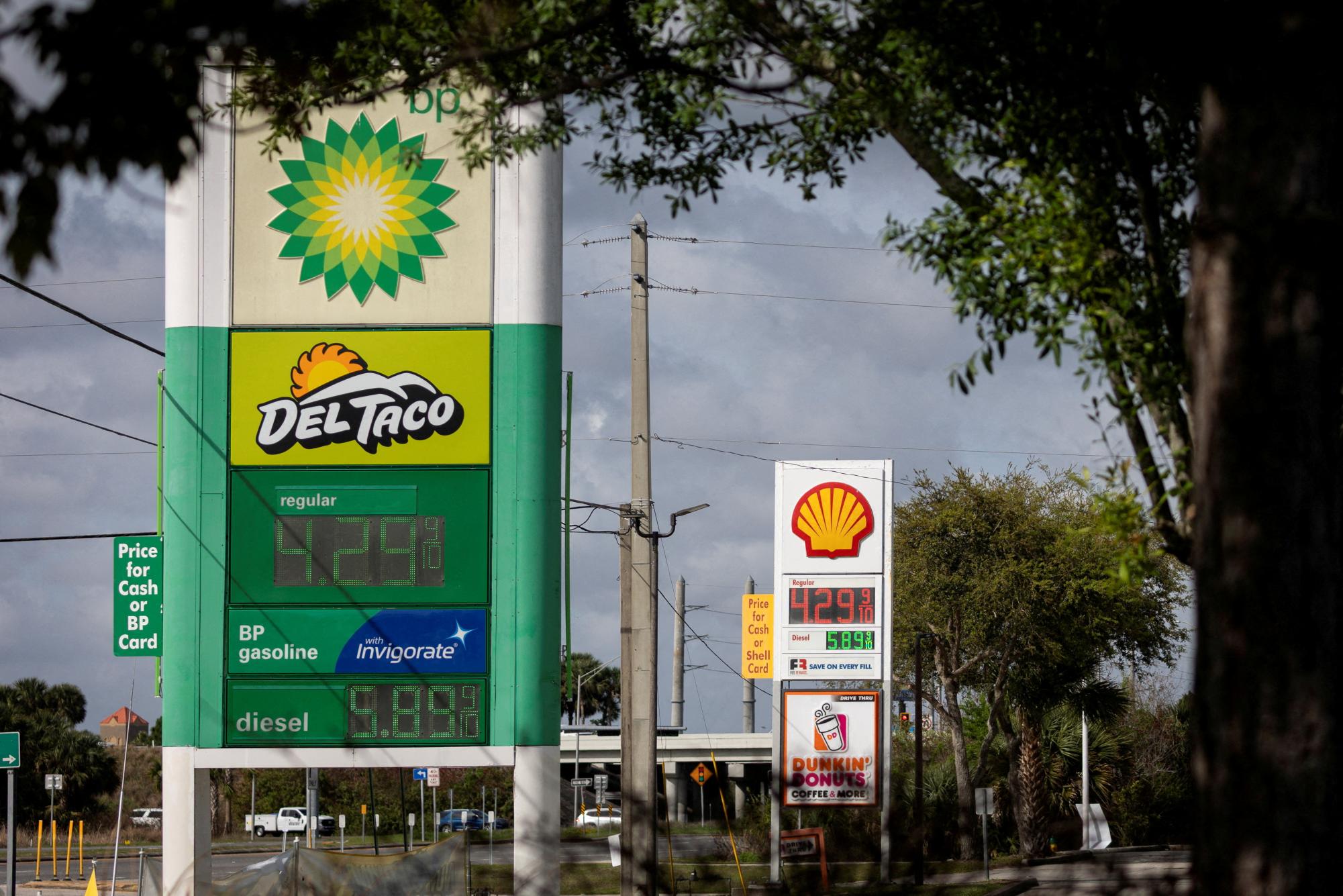
With gas prices on the rise, they are reshaping how student drivers think about driving, turning routine driving into a constant calculation of cost and necessity.
For sophomore Berkin Oral, who began driving four months ago, filling up his tank has already become a noticeable expense.
“I don’t drive much other than to school and back, so I fill it once every two weeks,” Oral said. “However, it costs about $60 every time I fill it up. That’s like $120 a month and $1,500 a year.”
Even though his parents help cover the cost, Oral said he still pays attention to how often he is on the road. That awareness has changed his habits behind the wheel. Instead of driving without a plan, he said he tries to cut back on unnecessary trips.
“I try to drive more efficiently,” Oral said. “My parents tell me, don’t drive when you don’t have to. If I’m going somewhere like a restaurant and something’s closer, then always go there instead of somewhere further away.”
Oral also pointed to possible community responses, even if large-scale changes are limited.
“We most likely can’t do bus service, but we could encourage people to carpool more, or like people who live close to walk or bike,” Oral said.
For junior Asher Ridzinski, who got his license a year ago, the impact of rising gas prices came from a shift in understanding rather than habit at first. Before driving regularly, he mentioned how he did not realize how quickly the cost adds up.
“I used to just drive by the road signs and see that the price was $3 or so,” Ridzinski said. “I was like, ‘that’s not expensive,’ I didn’t really know how much it actually cost to fill up a tank. It’s not just $3, it’s $3 multiplied by however many gallons are in your tank.”
That realization has changed how he views everyday spending.
“I think it’s bad that gas is really expensive, since I can spend that money on other things,” Ridzinski said. “I can go to a gas station and buy a bunch of candy, or I can buy a meal for my family for the price of gas.”
To offset costs, Ridzinski occasionally carpools when traveling to volunteer events, helping split the expense of driving. While small, those adjustments reflect a broader pattern among student drivers who are becoming more aware of how quickly fuel costs accumulate.
“I carpool with my friend Collin Ku when we go downtown every other Thursday to volunteer,” Ridzinski said. “By driving him, we can save gas.”
As prices remain high, students are adapting in small but noticeable ways: driving less, planning trips more carefully and sharing rides when possible.