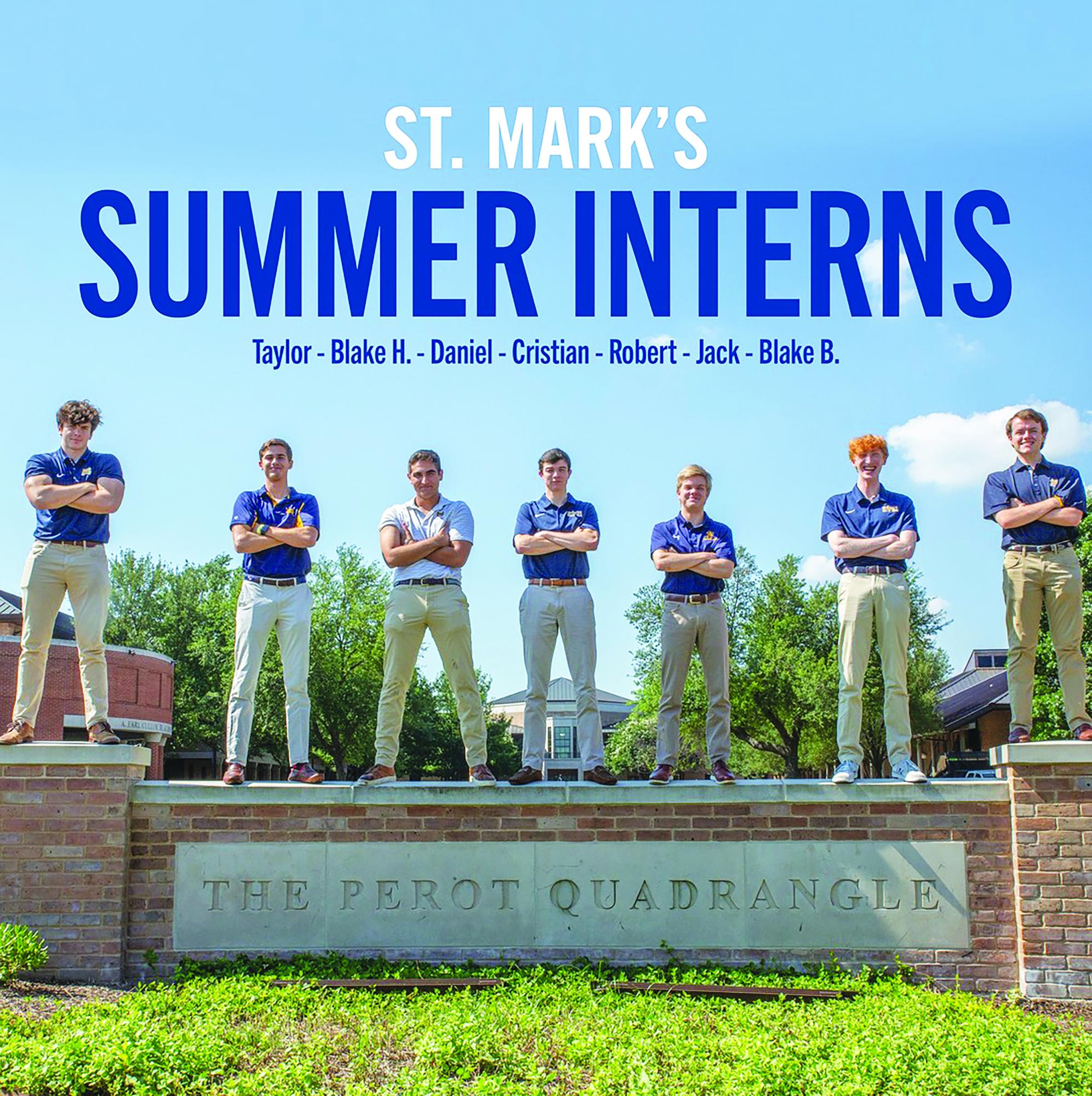
Before his freshman year in college, Taylor Hopkin ‘20 didn’t plan on running an IRONMAN or working at the school. But extenuating circumstances shaped Hopkin’s decision to take a gap year.
Most students move straight into college after completing their four years of high school, but for others, they choose to take a gap year, spending a year between institutions and seeking to reach other goals or spend time travelling around the globe.
Hopkin first considered taking a gap year due to the COVID-19 pandemic, which forced high schools and universities alike to restructure their curricula, often turning to online learning, with very few having the option of masked or alternate day classes. Hopkin was reluctant to go to college within this new environment, as he believed that it would only serve to complicate his learning rather than advance it.
His other reason was more serious and out of his control.
“In early August I found out I had a tumor in my jaw, it was totally benign, but I had to get a couple surgeries to remove it,” Hopkin said. “Navigating that mixed with COVID made considering a gap year obvious. There were so many other people already doing it, so I might as well do it too and then hit school running when it was more regular.”
The multiple surgeries that were needed to excise Hopkin’s tumor sidelined him for four months, which ultimately led to his decision to forgo his freshman year at college and instead stay in Dallas to recuperate, reconnect with his community and begin the process for other endeavors.
“When I had recovered to a point where I could move more regularly, I did two things that were relatively exciting,” Hopkin said. “I started training for an IRONMAN which was a big time commitment. Given I had so little going on it was a little easier for me to focus on. Also, when the alumni office heard that I was on a gap year, they offered me to stick around and help out there. I helped at the office and then in doing so, I ended up helping out at other things at St. Mark’s.”
An IRONMAN triathlon consists of a 2.4 mile swim, a 112-mile bike ride and a 26.2 mile marathon. Hopkin’s IRONMAN journey was a major part of his work towards getting back to full health post-operation. He began training for it in Dec. 2020, with the race originally scheduled for April 2021, although delays eventually had the race postponed to Oct. 2021.
“The IRONMAN was a blast,” Hopkin said. “I had a buddy who was training for one and I had lost a bunch of weight because of the tumor, so it became a physical challenge for myself to get healthy again. It was a lot of fun, and the training wasn’t relatively extensive. It’s not an all day thing by any means and plenty of people do it while they’re working or while they’re in school so I still had a ton of extra time.”
His other work within the school brought him back to his roots and allowed him to connect with the community on a deeper level with both teachers and students. From running intramural basketball tournaments to planning campus events and hosting alumni, Hopkin made sure to involve himself deeply within the school.
“I was tremendously grateful for the community,” Hopkin said. “I was one of the last people to join my grade, so I had, compared to everyone else, limited exposure to the community, but it was one of if not the most impactful things in my life during those very transformative years. So planning graduation, being involved with alumni and helping plan events felt like an opportunity for me to give back, but it ended up being another instance of where I felt I got 15 times more than what I gave from St. Mark’s.”
While most gap years occur between one’s last year of high school and first year of college, Harrison Lee ‘19, who finished his undergrad from University of Texas at Austin in the spring of 2023, has been taking a gap year between his undergrad and medical school.
“I’m applying to med school, and that kind of takes a lot of planning, a lot of deliberation,” Lee said. “So I’d say the gap year was kind of necessary. Especially at the stage where I committed myself to medicine, I needed it.”
Although the decision to take a gap year was mostly Lee’s choice, conversations with family and friends still ultimately shaped his decision. For Lee, it was important to explain to his family and friends why he was making this decision and how he planned to spend his time productively.
“I talked to my parents a lot about it, and they just wanted to make sure that I was doing something with my life, not just taking time off for the sake of taking a break, because a year is a really long time,” Lee said. “(My) friends were all in agreement that (in) this day and age, a gap year is never a bad thing.”
During his time off school, he’s gotten a full-time job, and he personally believes that gap years can be extremely beneficial for those who need it, while acknowledging that expectations can differ from reality.
“I’m working at UT Southwestern and I’m doing basic science research here, and so I’ve learned a lot, hopefully putting out a paper by the end of this,” Lee said. “It’s helped me get to where I want to be, which is ultimately med school. I’d say I was surprised in the regard (that) a gap year exceeded expectations with personal growth. I just had a lot of time to do things that I want to develop as a person. The gap year in general has been kind of unstructured, but definitely fulfilling.”
Although gap years can bring personal growth and development, Lee believes that a full year off can also affect professional development and can even be a disadvantage when looking for a job.
“I think that it could be an occupational hazard with taking a gap year,” Lee said. “But I think that’s definitely a con that is outweighed by the benefits of taking a gap year. It’s a whole year off, and so if you’re itching to get somewhere professionally, a year away can be a disadvantage.”
Regardless, Lee stands by his decision that gap years can be extremely productive, especially for those on a pre-professional track who need the time to find themselves.
“You can spend a bunch of time with yourself, with your thoughts and develop personally. Every once in a while I kind of have this (sense) existential dread. I think it’s almost too much time alone with my thoughts,” Lee said. “(If) you know you have a direction of how you want to spend your gap year, I think it’ll definitely help you in the long run.”
Yet, Hopkin believes that a full year off can prove to be beneficial for people if they spend their time wisely. While a year without school can appear as lazy, for Hopkin the gap year worked as a catalyst to help him decide what type of person he wanted to be.
“I think personally there were some parts of myself that I still needed some time to figure out before going to school,” Hopkin said. “I would encourage kids to think about the type of person they want to be and the things they want to focus on going into college and if those are questions that are a really difficult for them to answer, I think a gap year is a great way to start.”