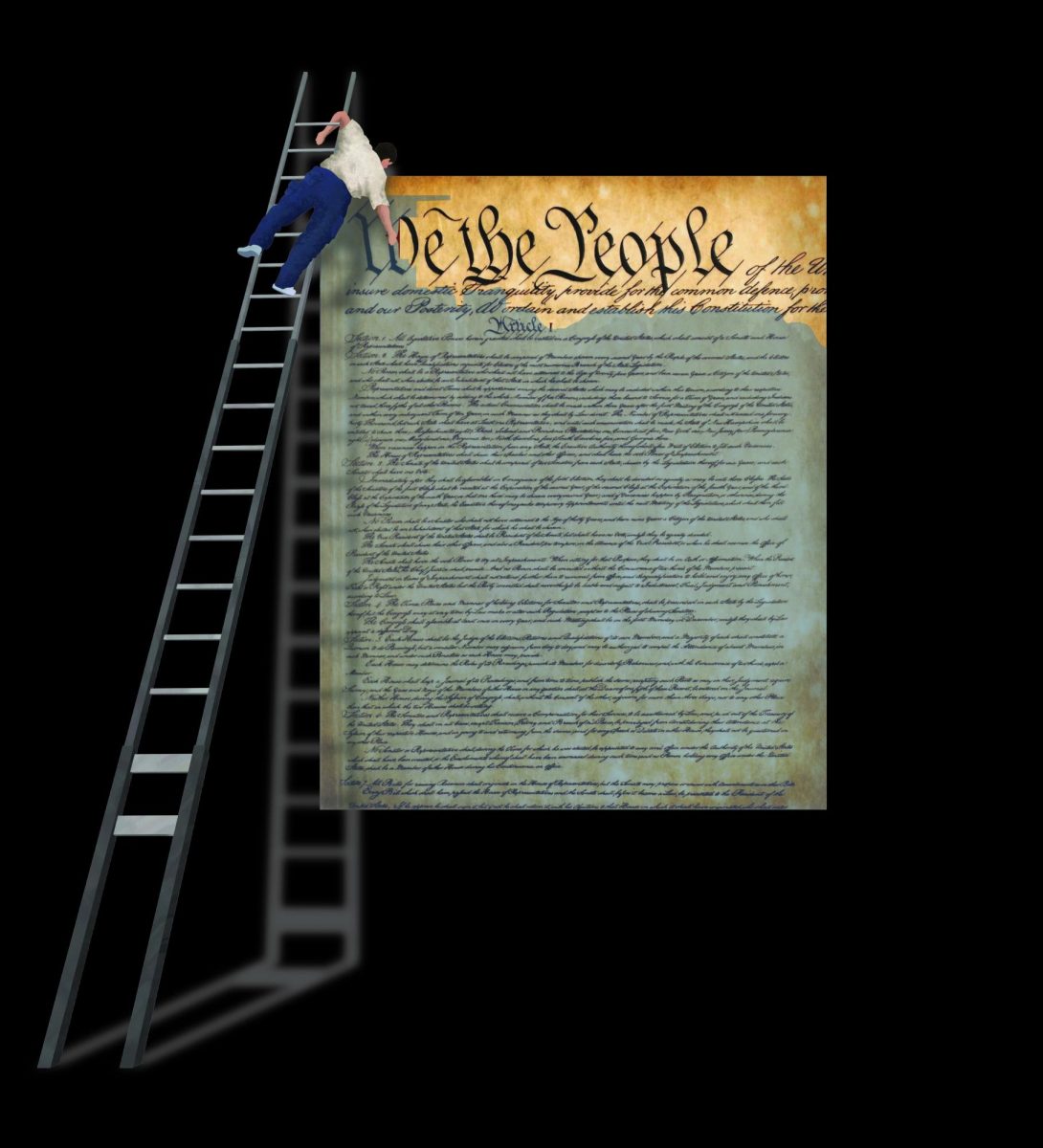
At its most basic level, cheating seems easy to define. Cheating is breaking the rules. It could be bringing a phone into a test. Sending your homework to your friends for them to copy. Pretending to yawn in order to sneak a peek at the sheet from the person next to you.
As long as there has been required schooling, academic dishonesty has existed. Walking down the hallways, it’s not uncommon to overhear a conversation consisting of a ‘what was on the test?’ and a ‘was there a reading quiz?”
Some students rarely describe what they’re doing as cheating, instead describing it as problem-solving. Working smarter, not harder.
That shift didn’t happen overnight. J.J. Connolly Master Teaching Chair Nancy Marmion points out that cheating has always existed, but the ease of it has changed. Before the age of the internet, some cheating methods included bringing a cheat sheet into an exam and or writing answers on hands.
“With the internet, with tools like ChatGPT, it’s so easy to cheat, and in turn, so much more tempting,” Marmion said. “It also limits the amount of time you have to think about whether or not you should be cheating.”
In the language department, students are allowed to use the online dictionary ‘Wordreference.com,’ but not translation programs. The distinction starts off clear, but then looking up a word turns into translating a phrase.
“Before you know it, you’ve typed in an entire paragraph, and then your entire paper,” Marmion said.
As the faculty chair of the school’s Discipline Council, Marmion has seen how students justify themselves. In some ways, cheating has become less about dishonesty and more about coping.
“Some of (the students) the Discipline Council meets with do feel guilty,” Marmion said. “But others probably just are sorry because they got caught.”
St. Mark’s is a college-preparatory school — the workload students deal with is substantial. Students juggle demanding classes, athletics, leadership roles, all while feeling pressure to present a flawless version of themselves. To stay afloat in this academically stressful environment, students think they need perfect GPAs, perfect extracurriculars and a perfect SAT score. After all, the final goal is to get into their dream college. In that mindset, lying and cheating can start to feel justified and necessary.
“Some do whatever it takes to get into that school,” Marmion said. “They believe that the ends justify the means. But if you cheat your way into your dream school, you’re not going to be prepared when you get there.”
When a student cheats, he doesn’t just compromise himself. The student on his right, who could’ve studied for hours last night doesn’t get the curve he needed. The teacher, who already suspects the cheater, needs to find other methods to assess students.
“What’s the value of the St. Mark’s diploma?” Marmion said. “Cheating hurts the actual cheater, current students, alumni, future students and ultimately, the institution as a whole.”
At an alumni gathering, one of Marmion’s former students spoke to her about his altered procedure in his writing classes. Every time he writes an essay, he runs it through an AI checker. It’s not like he used AI; he’s just spent too much time on it to get accused. Occasionally, the scans flag a couple of phrases and sentences, and he rewrites them so there’s no uncertainty when his teacher grades his work.
“It’s so sad that a student who’s not using AI has to go through all that,” Marmion said. “I don’t know how schools are going to deal with this.”
Thomas B. Walker III ’73 Mathematics Department Chair Shane May remembers when he was taking calculus as a senior in high school, and during an important test, his classmate in front of him turned around and tried to copy a couple of answers.
“I remember being offended and thinking, ‘Why would you think I’d help you right now?” May said.
When May was in high school, there was no internet. No way to take pictures of tests. No way to cheat besides through word of mouth. For him, it’s easy to look back and know that he didn’t cheat on anything. But if he were born and became a student in the age of technology, May doesn’t know how tempted he would be to cheat. Today, even he admits he sometimes uses shortcuts.
“If I want to find some factors of a large number, rather than sit for four or five minutes hunting for a factor, it’s easy to go to Wolfram Alpha and have it find a factor for me,” May said. “To me, that’s not cheating because I know how to find this factor — I’m just trying to save four minutes of my life.”
When dealing with a dishonest student, May hears various types of explanations.
“After catching a student cheating, they could say, ‘You just don’t understand what I’m going through’ or ‘You don’t understand how busy we are,” May said. “Yes, we’re at different places in life, but I’ve had stressful times, too.”
May recognizes that students are under pressure to perform, so before tests, he takes away some of the things that would make it easy to cheat, like phones and uncleared calculators.
He and Marmion know students will stumble and make mistakes. Everyone makes mistakes and, hopefully, learns from them. They don’t hold grudges against students who have cheated in the past, as long as they feel guilty and use the experience to become a better person in the long run.
“As a school, our goal is to help boys become good men,” Marmion said. “The consequences of cheating in high school are very small compared to the consequences of doing something illegal as an adult.”
Beyond the classrooms on campus, cheating extends beyond an isolated academic framework.
The conversation around character at school has expanded over the past two decades, increasing emphasis on bringing the culture of character development from the background to the forefront.
“The desire was for more consistency, clarity and intentionality of purpose,” Eugene McDermott Headmaster David Dini said. “A big part of what we’ve tried to do is to think carefully and intentionally about our mission and make sure we’re devoting the same level of effort and intentionality to character that we do to content.”
But early on, the initiative faced pushback. Some faculty questioned whether it would distract from core academic programs — diminishing the strength of the school.
“Resistance to the idea was like, ‘Now you’re asking me to do something I wasn’t hired to do,’ or ‘You’re asking me to focus on something when my focus is teaching my discipline,’” Dini said.
The administration found its answer through patience. Engaging Marksmen and faculty members, one discussion at a time, building pockets of momentum rather than forcing an immediate schoolwide overhaul.
And over time, those pockets grew. Deterrence of cheating through character — what once lived in the margins of the school’s education — has become central to its identity.
“It’s like learning a language,” Dini said. “You practice it, you do it more frequently. It becomes second nature. So if something happens and you’re in a stress situation, your cognitive experience kicks in. ‘I’ve seen this before. I’ve felt this before. I’m going to be less inclined to make a bad decision.’”
But still, this system doesn’t guarantee total buy-in. The language is taught and incorporated in lessons and activities on campus. But not every student becomes fluent.
“You can easily get in the condition of thinking, ‘If everybody’s going to cheat, everybody’s going to cut a corner, so I can too,’” Dini said.
And when this rationale takes hold, deeper conversations become necessary.
“Usually what occurs is that people have gotten in trouble more than once, and it is upon being caught a second time,” Upper School Counselor Mary Bonsu said. “That’s when we process the stress, the psychology of being a student of integrity and the uncertainty of all of the possible consequences that come with it.”
The bigger issue, she believes, boils down to a lack of tools. Strategies for managing anxiety. Ways to keep perspective when the stakes feel impossibly high. Because everybody messes up. Falls short of their own personal standards. It’s just how they handle their next move.
The pressure to perform well doesn’t create dishonesty on its own, but it does present the temptation to cheat more clearly — a weight that might grow as people get older and involve themselves in a variety of avenues in life beyond the classroom habits formed in one’s youth.
To her, adolescence is a unique time where people are ego-driven. Obsession with image, with status, with getting ahead. And while that doesn’t necessarily mean most kids aren’t going to outgrow these tendencies, not actively working on them can make the patterns developed from youth carry over.
“We do see adults who continue to cheat in many areas,” Bonsu said. “You can see it in people who don’t really hold stable relationships, don’t have a lot of empathy and justify a lot of their negative decisions.”
Because later in life, the arena has shifted. In high school, it’s grades and extracurricular activities. In adulthood, it’s more human connections. Careers. More opportunities for displaying integrity in the moments nobody else is watching.
And for Bonsu, ensuring that students cultivate behaviors to take the high road in their endeavors involves helping them recalibrate what’s actually on the line — beyond the next test or next application cycle, but across a lifetime.
“I think the stakes are sometimes too high,” Bonsu said. “Kids need toolsets to ask themselves, ‘If I don’t get this, or if my life doesn’t go in this direction, will I still be okay? Happy? Content? Proud?’ Those are the outcomes that matter.”
Because in her eyes, what defines fulfillment in life isn’t solely status or high marks or which company someone got hired into. Ultimately, the baseline is character. All built upon a preexisting track record of holding integrity.
“I would love for kids to see the full value of integrity throughout their entire lifespan,” Bonsu said. “If you make great choices and hold integrity high as a young person, then you can have a good level of confidence that you’re going to make moral, high-character decisions when consequences carry more weight.”
And at the core is self-perception. It’s accountability. Conviction.
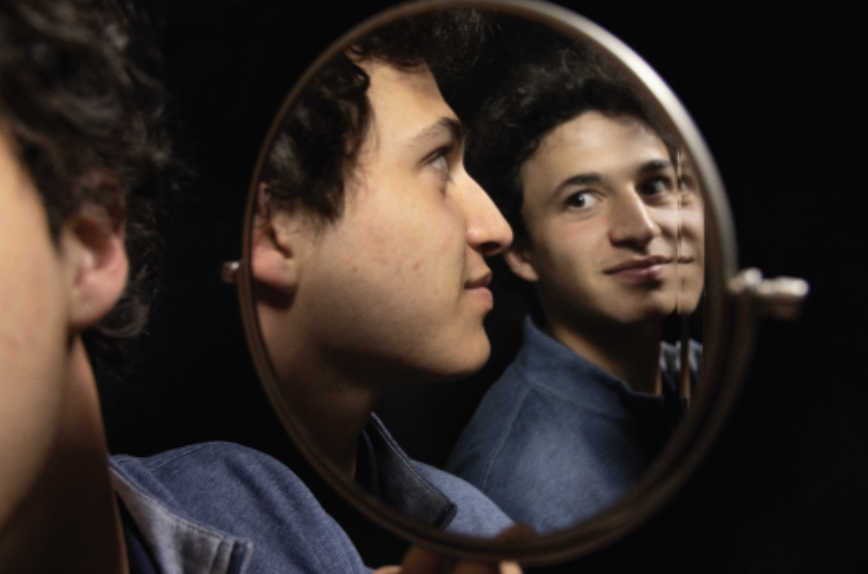
“Accountability is tied to identity, like, ‘This is who I am.’ You start to inform who you are by how you’re held accountable throughout your entire childhood,” Bonsu said. “And then by 16, 17, you’re like, ‘This is who I am. I’m this kind of person. I can truly look at myself in the mirror.’”