
Anyone can describe a house: four walls, a roof, a door and windows. But picturing the family living inside is much more complex.
The idea of a “traditional family” has evolved. Some households have eight children; others, just one. Some are led by a single mother, and another by two fathers. Some families span multiple generations with grandparents or even great-grandparents under the same roof. And each of these families shape the unique fabric of the school.
They don’t need to follow a cookie-cutter structure with stereotypical roles. They are where arguments happen, reconciliations are made and love endures unconditionally. And while families have different compositions, they each find their way to thrive.
There’s no single way to be a family. Only countless ways to make it work.
There wasn’t always someone at home to open the door for him. The little key in his pocket welcomed him after school on most days. He was in fourth grade when this change happened. Young, but old enough to notice the newly quiet house.
Junior Noah Park’s father had taken up a job in New York, leaving throughout the week to work and stay there. His mother had four kids and four dogs to take care of. The oldest, Jake ’23 and Owen ‘25, attended St. Mark’s while Noah didn’t at the time. And the youngest, Ollie, required special attention; he was blind.
So when his mother drove Owen, Jake and Ollie to school each day, Noah understood what it meant for him, his new responsibilities. He rode his bike, let himself in and learned early on what it meant to manage on his own. He wanted his brothers to have the best opportunities, even if it came at his own inconvenience.
Each boy grew a sense of independence; there was only so much attention that could be given with the parents’ vast responsibilities.
“I’ve always felt like I’m my own person and have to create something for myself,” Noah said. “My dad has definitely helped pave the way for me.”
With her husband hundreds of miles away, Mrs. Park kept herself busy, driving the kids across town, helping Ollie with his needs and holding the house together through exhaustion and love.
Noah saw it all.
“I don’t get angry about them being gone,” Noah said. “I understand what they’re doing. It’s for us.”
Both parents are second-generation Asian Americans who knew little about convenience. Their parents (Noah’s grandparents) had worked tirelessly to build a life in a new country. That same resilience carried forward. Both Mr. and Mrs. Park relied on their siblings, something instilled in Noah and his brothers.
Now, with Jake and Owen away at college, the house feels quieter, but the lessons remain. The Parks have learned that stability isn’t necessarily about everyone being under the same roof. For Noah, that means honoring his parents’ sacrifices by making his own to help everyone succeed.
“I’ve understood what they’re sacrificing is what we’re going to gain,” Noah said.

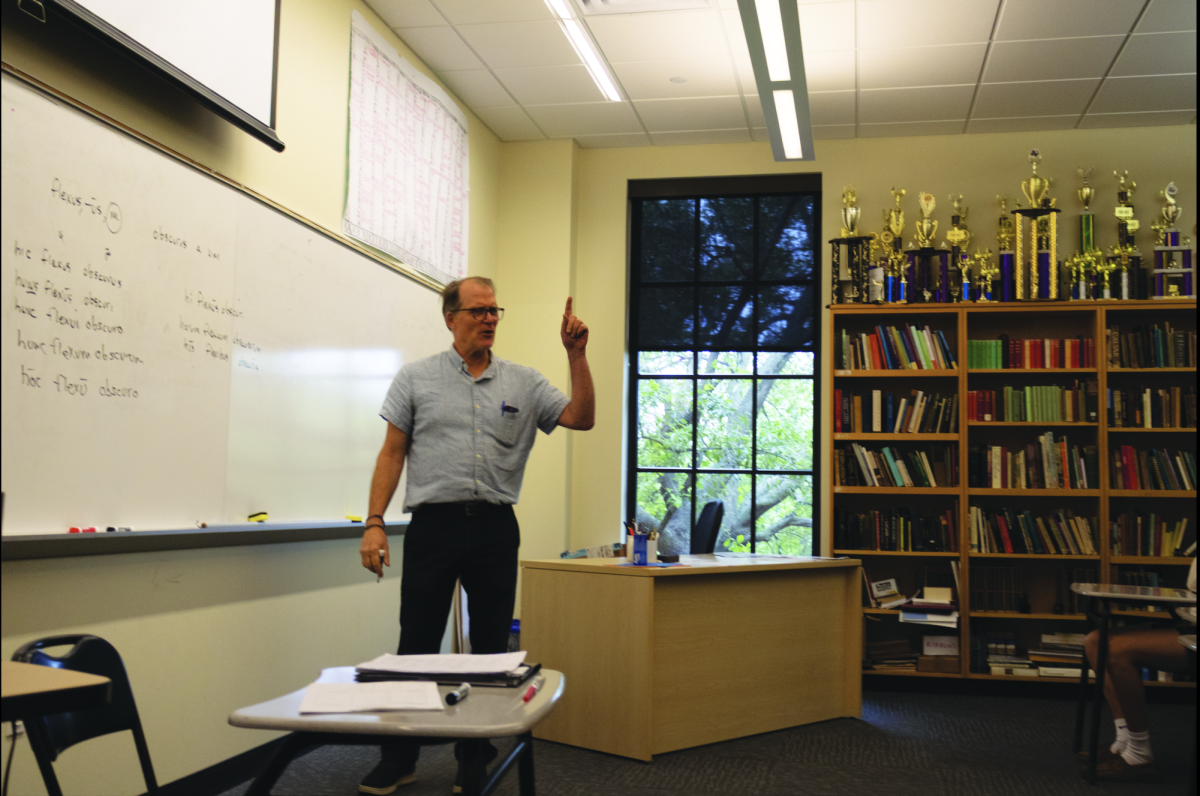
On some days, History and Social Science Teacher Dr. Jerusha Westbury’s fourth-grade son Oliver mows their yard. On other days, he might vacuum the house. Or unload and reload the dishwasher after each meal with her.
Because on those days during the week, she comes home exhausted.
“The sad part is that, at times, I probably spend more effort on my students than I do for my son,” Westbury said.
As a single mother whose job revolves around guiding discussions between teenage students around Harkness tables at school, she knows that balancing her family and work responsibilities can leave her energy levels depleted.
And more often than not, it can feel as if she’s never really leaving work.
Oliver has learned to navigate his mornings by himself—getting ready or finding tasks that need to be done around the house without being asked. But despite her son’s independence, Westbury has set the goal of sitting down with him once a week to go over his schoolwork and assignments together.
“I want him to cultivate the behavior of looking around and seeing what needs to be done and proactively doing it,” Westbury said. “I think he’s become more responsible for remembering his own schedule and making sure he has the materials for it.”
That absence of a co-parent can transform nearly small decisions into internal debates. The questions that other “traditional” couples can hash out together—is this a big deal or not? When do we stand up for him? When do we not?—can echo unanswered in Westbury’s mind.
“It’s just having somebody in the household to talk about my son with,” she said. “I don’t get that alternate perspective, which means I may not always be helping him the best way I could be helping him.”
Yet within this single-parent dynamic, Oliver has grown to become his mom’s strongest advocate, because when St. Mark’s Father-Son events roll around, she shows up as one of the few mothers among fathers.
“I’ll almost chicken out,” Westbury said. “And he says, ‘No, come on, we’re gonna go. You’re doing the work of my dad. You can go to this dad event at school.’”
She doesn’t know of too many children in his grade who also come from single-parent homes. And she knows he probably feels a little different from the rest of classmates in that sense. But whenever she might waver, her son pulls her through with him. The community welcomes them both.
He was 6 years old when his parents divorced. Too young to understand those changes.
“It’s just the way things were,” senior Spencer Hopkin said.
Two homes an hour apart but there was never a disconnect.
At first, he and his four siblings stayed with his mom in Flower Mound for most of the time. The board games and movie nights and Bible studies kept the family together.
“My mom did a great job… there was never a moment when I felt unwanted,” Spencer said.
As he grew older, Spencer began to realize his mother’s position, her responsibilities: a single mother raising five kids. His brother Taylor Hopkin ‘20, just seven years older than Spencer, stepped into a greater role. He glued everyone together as his mother struggled and questioned how she could do it. To Spencer, there weren’t any gaps that his mom or dad couldn’t fill because of their circumstances or responsibilities; it was just that his brother guided him instead. He taught Spencer how to shave and how to do his homework or just be there to talk to.
On Spencer’s first day at school, his name resonated in the Great Hall after Taylor, the former Student Council president, commended him during his Convocation speech. It gave him the confidence to find his place.
“He was always looking out for me, and he did everything he could as a brother to be there whether I asked for his help or it was apparent I needed it,” Spencer said.
Every other weekend, the kids would stay at their dad’s two-bedroom apartment. Spencer and his twin sister slept in sleeping bags beside their father’s bed, Taylor on the couch, and his two older sisters in the other bedroom. It was cramped but cherished. He remembers playing football against his brother with their dad quarterbacking their showdown and the time his father bought supplies for a paper-airplane contest which consumed their entire Saturday. Spencer doesn’t remember who won or lost; in his mind, they’re all just memories that make him smile.
Yet in this dual-house divide, the family grew closer. But they were just an hour away from an entirely different dynamic.

Whenever junior Gregory Cunningham gets into an argument with his twin sister, Liliana, they open their phones to look at the date. On odd days, Gregory sits in the front seat on the way to school, picks whatever show he wants to watch on the TV and gets the keys to the car. But when he wakes up the next morning, his sister wins the days’ sibling fights by shoving her screensaver in his face—it’s an even day of the month.
To minimize arguments, the pair decided to split their chores and privileges perfectly in half, recognizing the calendar date as their law. The twins’ parents, Bennett and Michael, have always put an emphasis on familial communication.
In the Cunningham household, family dinners are mandatory. Even if Liliana has an evening field hockey game or Michael’s shift is running late, the family believes it’s essential to sit with each other for dinner. Cooking for the family every evening, Bennett has the kids put away their phones and encourages them to talk about their days, whether they were good or bad.
“Growing up isn’t easy, and it’s only gotten harder,” Bennett said. “I want our kids to be able to talk to us about anything: problems, concerns, joys. I want them to trust us.”
This openness becomes especially important in a household that doesn’t fit the traditional mold. When the twins were younger, Bennett and Michael had worried about the lack of a motherly presence in the household, especially for their daughter. The pair enrolled Liliana into The Hockaday School, surrounding her with classmates and role models she could easily communicate with and look up to. For mother-daughter dances, they’d ask a close family friend to substitute in as Liliana’s plus one.
And for Gregory, he’s never felt that absence of a mother figure. Whenever forms require him to put down the contact information for both of his parents, he automatically crosses out ‘Mom’ and writes another ‘Dad’ instead. It’s not that he’s focusing on his family’s differences; that’s just what’s been normal to him for his entire life.
“I always get asked ‘Who’s the mom, and who’s the dad?’ Gregory said. “And it doesn’t really apply to my family; there’s no specific role that gets assigned.”
To the Cunninghams, home means unconditional support, where all worries are welcomed and differences are understood. They’re an atypical family, but their values are the same as others.
“As parents, we’re their guides,” Michael said. “We guide them to be good people. To find their passion. To make the right decisions. That’s the best you could ever hope for as a parent.”
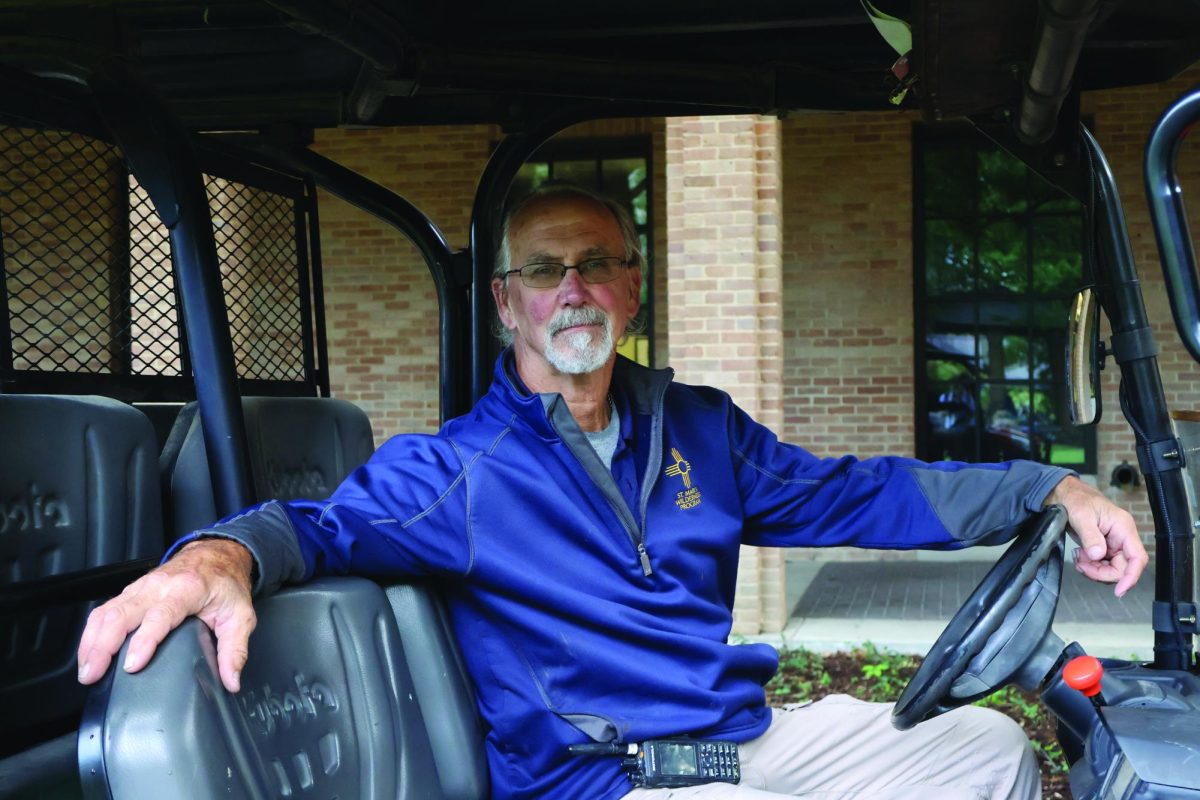
Growing up, Korey Mack ‘00 was the youngest person at home by more than 50 years. And even his grandparents weren’t the oldest generation in the household; Mack grew up with his great-grandmother and great uncle, too. His grandparents adopted Mack from his parents, who were young and couldn’t raise him by themselves.
There was always someone telling him a story, offering advice and teaching him life lessons. There was always someone caring for him.
He never felt he was missing anything, even though his parents weren’t the ones tucking him in at night. His grandfather ran a limousine business, employing extended family members who became Mack’s chauffeurs, caregivers and safety net.
As the Director of Student Recruitment, Mack works with families of all configurations — single parents, separated families, adopted children. And his own upbringing taught him that that family doesn’t require an exact structure.
“We’re all related in love, whether we’re related in blood or not,” Mack said.
That philosophy came full circle when Mack’s father legally adopted Mack’s 7-year-old niece — a child who needed the same kind of care that Mack once received. Watching his dad step up and be a father decades later showed him that love can make any family whole.
Now, Mack has three children of his own who live with their mom, seeing them twice a month. When they’re together, he insists on having the same family dinner rules that he grew up with: no screens and real conversation.
Just like how his grandparents and extended family cared for him, Mack wants to make sure his children remember that they’re loved by an expansive network of aunts, uncles and grandparents.
Mack notes that this familial network expands to the school as well; any Marksman can lean on another. As a former student, Mack has experienced the brotherly bond with his fellow classmates firsthand.
“St. Mark’s is no different than a blood family,” Mack said. “We’re just related in different ways, but the bonds are just as strong. We spend so much time together, it’s almost impossible not to become a family.”
Brandy Schumann, SMU’s counseling program Clinical Professor and Internship Director, emphasizes that one of the keys to maintaining a healthy family structure is simply having open dialogue — being able to just talk about the things that otherwise won’t be brought up elsewhere.
“So many parents now, I think, didn’t have a lot of communication with their own parents,” Schumann said. “And the reality is that there’s a lot of taboo topics that parents just didn’t talk to their kids about, and so having some of those conversations, but having them in developmentally appropriate ways are helpful.”
But Schumann also notes that non-traditional households shouldn’t automatically be seen through a negative lens, as she believes some possess unique strengths that are often overlooked when such assumptions are made.
“We don’t want to just assume these families are struggling,” Schumann said. “There’s a lot of very healthy ones that I think we could stand to learn from. I do think that sometimes, and when it’s a family of divorce, you’ll sometimes see a child promoted to a more powerful position, and so they can become the parent’s confidant.”
And these families don’t exist in a vacuum. From Schumann’s perspective, modern cultural shifts advocating for inclusivity and diversity have brought more attention to the matter — a reminder that at the very least, “the norm” has become more expansive than once suggested.
“There is a lot of diversity in families,” Schumann said. “We kind of compare ourselves to what we think we’re supposed to be doing. But I also think that now, there’s a little bit more representation of, ‘Oh, a family isn’t always two parents and a child and a dog and a white picket fence.’”