

In sports like singles tennis and golf, there is no one to blame for mistakes; there are no teammates to lean on when one is having a bad day. It’s just the player, his thoughts and the pressure.
Playing these sports can be challenging, not just physically and technically, but for the mental struggle of isolation. Even with fans and coaches on the sideline, athletes are the only ones who can impact the outcome of a competition.
“You’re out there by yourself,” junior golfer James Hoak said. “You don’t have your teammates with you on the course, so you kind of just have to stay strong. No one’s there to back you up or help you if you hit a bad shot, so you’ve got to have a strong mental game.”
While being out playing a sport alone is a daunting challenge for some, sophomore tennis player Bryan Li recognizes the are benefits to this type of environment.
“I think the independence of tennis is both good and bad,” Li said. “Yes, every mistake is on me, and it gets frustrating at times, but there’s a sort of freedom to it as well, knowing that you have total control over your game. It forces you to execute the controllables and make no excuses.”
In order to take some pressure off the isolation, Li focuses on controlling what he can and understanding that the positives and negatives are just a part of the game.
“After losing a tough point, I tell myself to stay positive, acknowledge what went wrong, and move past it,” Li said. “Every point matters, but once it’s over, it’s over; you can’t change the past. I try to stay positive with my thoughts while avoiding bad body language, as it can benefit my opponent. If I lose several points in a row, I just take a few deep breaths and hard reset.”
Playing a varsity sport is definitely competitive; however, many acknowledge that having fun can reduce a lot of the stress that comes from playing a single-player sport.
“I’ve met some really good friends that I play golf with a lot, and they’ve helped me a lot,” Hoak said. “It just makes it more fun. If you’re not playing well, having a friend out there with you definitely helps you get through it.”
Hoak notices that in golf, while players are still very competitive, they are more supportive of each other’s success than in a more traditional high school sport like football.
“I feel like [the culture] is pretty positive,” Hoak said. “Everyone sort of roots for each other. You say ‘good shot’ and stuff like that, which is kind of different from other sports. Most sports are more competitive during games, but golf’s a little different in that sense.”
A common part of athletics is going through a slump, where an athlete is not playing at their best. In team sports, a player can rely on their teammates to get back in form, but in golf and tennis, it is important to believe in one’s abilities because no one else can do it for you. When having a bad round, Hoak approaches it differently from many.
“If you’re not playing well, don’t worry about your swing, just try to hit the ball to the target,” Hoak said. “If you get too caught up in swing thoughts, it’s just going to hold you back. You’ve got to try to free yourself and play.”
Hoak tries to focus on the golf ing fundamentals he has built over years the and believes he can still hit some great shots here and there, even on a bad day.
“I didn’t really change anything with my swing,” Hoak said. “It was just a mental re-centering. I just thought, ‘The front nine is over. Let’s play as well as I can on the back.”
Li, on the other hand, tends to think about all possible outcomes to prepare himself for the unexpected that can happen during a match.
“It’s helpful to visualize specific pressure points and losses before they actually occur,” Li said. “It might seem a little ironic to think about losing beforehand, but it helps a lot mentally for me. For athletes, it’s easy for thoughts to spiral: if I lose this match, then my ranking will go down, then I can’t get recruited, etc., but the process of visualizing helps me counter that.”
Participating in a single-player sport definitely has its challenges. Still, Hoak and Li have found that, through experience and mental discipline, those sports can be just as rewarding, if not more so, than the more popular team sports.
“Mental toughness can absolutely be trained,” Li said. “It comes with encouraging parents, teammates, and coaches, but most importantly, it’s a skill that’s developed through consistent training and experiencing failure.”
Single-player sports call for mental discipline
Solo sports allow athletes to practice mental strength to succeed on and off the field.
May 15, 2026
Categories:
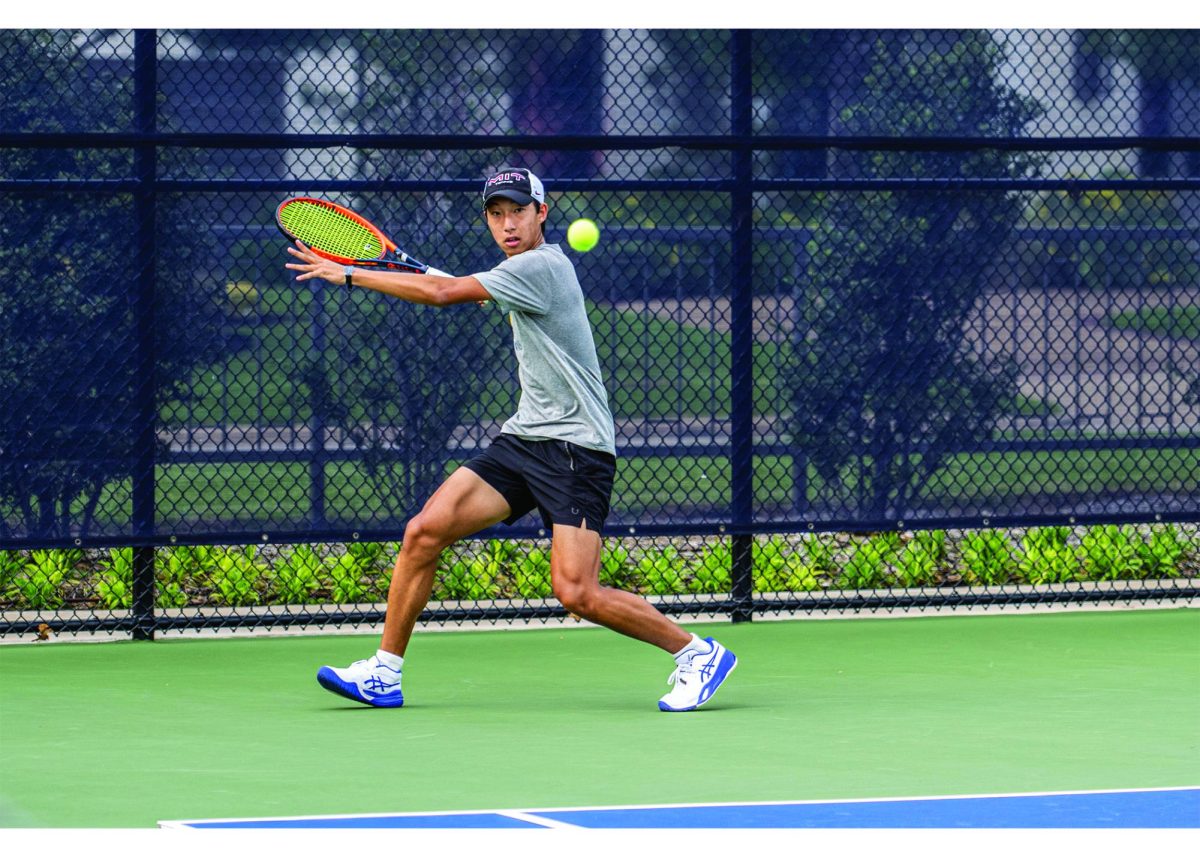
Bryan Li hits a forehand shot. The sophomore has learned mental discipline through playing tennis alone.
More to Discover


About the Contributors
Alex Calder, Sports Editor
Jake Pinnell, Staff Writer