In a world where screens often replace paper and algorithms shape communication, digital literacy has become as fundamental as reading and writing. Once considered a supplementary skill, the ability to effectively and responsibly use technology is now crucial to academic success and future careers — a shift that schools across the country are increasingly prioritizing.
As artificial intelligence, automation and online communication continue to redefine the modern landscape, educators are rethinking what it means to be “literate.” Digital literacy is no longer limited to knowing how to operate a device; it encompasses critical thinking, ethical usage and the ability to communicate well in digital spaces, including the workforce.
“If you don’t have basic technology skills, you’re going to be way behind, especially now with, as people claim, AI taking over a lot of jobs,” Computer Science Department Chair Kurt Tholking said. “You have to understand not only computers but also using AI or how AI could impact your chosen career profession.”
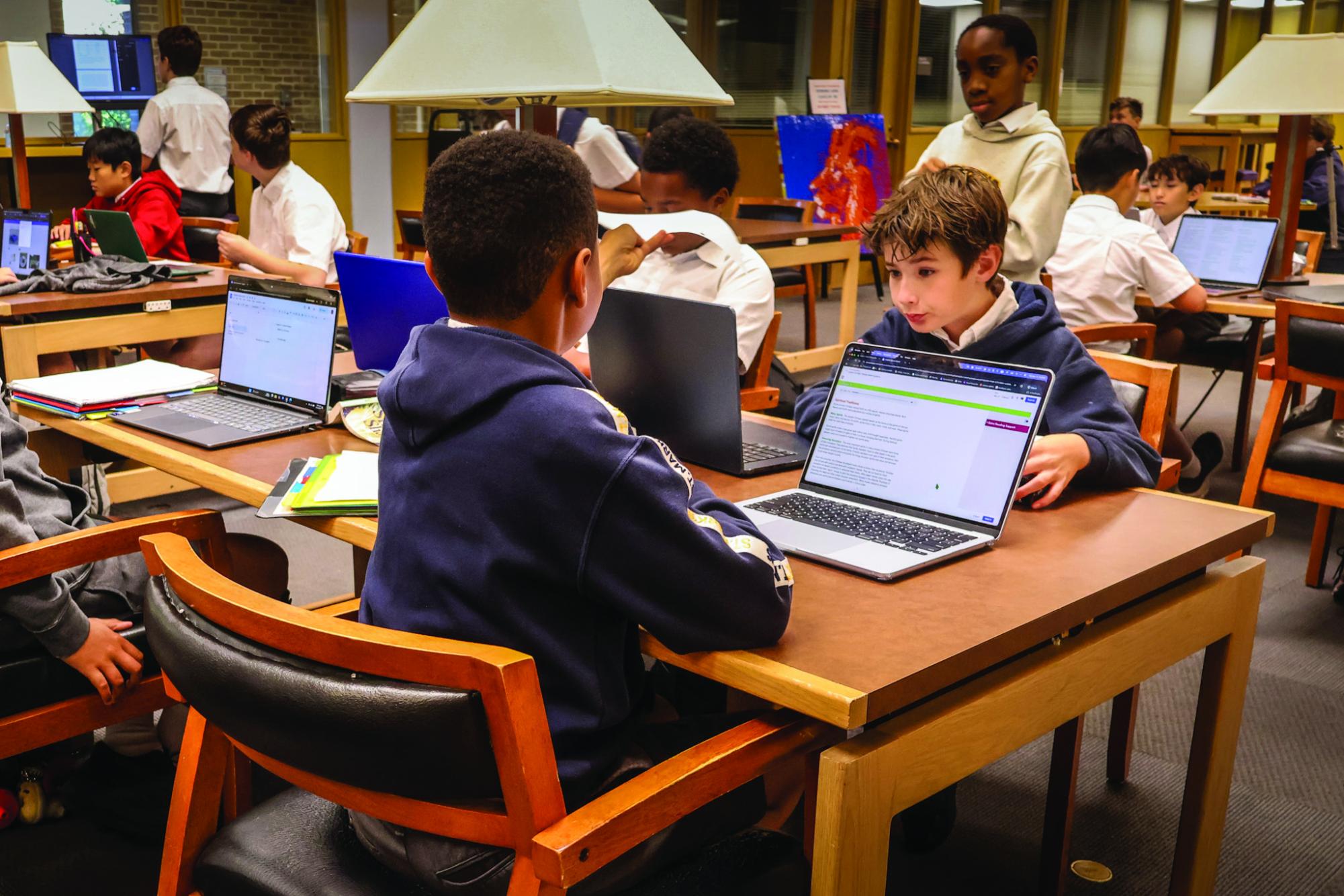
This growing importance is reflected in how early schools have begun introducing these concepts. On campus, digital literacy education starts in first grade, mirroring the way traditional literacy is taught from a young age. The goal is not just familiarity with devices but a structured understanding of how technology works and how to use it responsibly.
Yet, despite being raised in such a technology-rich environment, students are not inherently equipped with these skills. The assumption that “digital natives” automatically understand technology has shown to be extremely misleading.
“Just because you grew up using technology doesn’t mean you know how to use it properly,” Tholking said. “You can learn how to walk, but it doesn’t mean you’re doing it the right way.”
As technology evolves, the curriculum must too. The rapid development of artificial intelligence tools has introduced new challenges for educators, who must constantly adapt lessons to remain relevant and effective.
“With the recent changes in AI, we had to make some adjustments (to the curriculum),” Tholking said. “That’s one area where, as AI progresses and changes so rapidly, it’s hard to keep up.”
While technical skills are essential, digital literacy at the school extends into the humanities, where students are taught to think logically, write artfully and engage with digital tools in a meaningful way. In English classrooms, technology is both a tool and a subject of reflection.
“Digital fluency, for the most part, allows students to write without worrying about the legibility of their handwriting and the speed of their writing,” Trustee Master Teaching Chair in Humanities Lynne Schwartz said.
Even as digital tools enhance efficiency, educators remain cautious about overreliance on technology. The convenience of AI-generated content and automated corrections can hinder the development of digital communication skills if used improperly.
“Those few students who do overuse AI are depriving themselves of the opportunity to learn to communicate clearly, effectively and authentically,” Schwartz said.
This balance between leveraging technology and maintaining intellectual independence is a central challenge in today’s classrooms. Teachers aim to ensure that students use digital tools to enhance their thinking rather than to replace it.
Beyond writing, foundational skills like typing remain a key focus. The ability to translate thoughts into text becomes particularly useful in timed or high-pressure environments.
“It’s vital for students to learn the keyboard by touch, which speeds up written responses and enables writers to write as fast as they think,” Schwartz said. “This means that writers don’t get an idea and then lose half of it because it’s taken them so long to write it out by hand.”
At the same time, reliance on digital aids, such as Grammarly, has created new gaps that educators are working to address. By occasionally removing these supports, teachers encourage students to internalize the rules of language rather than depend on automated corrections.
Digital literacy also extends beyond academics into professional and social communication. Knowing how to present oneself online — whether through emails, messages or collaborative platforms — is becoming increasingly important in both college and career settings.
“A lot of digital literacy comes down to conveying yourself professionally: what level of formality to use, what’s appropriate online and those small things can signal whether someone is trustworthy,” senior Benjamin Standefer said.
Standefer, founder of the
501(c)(3) nonprofit Binary Tree, has seen firsthand how access to digital education can vary globally. His organization works to lessen the digital divide by providing technology education to underprivileged communities in developing nations.
“I think it’s really important that everyone’s at the baseline,” Standefer said. “That’s true at (the school), but not true in enough parts of the world. And then comes reaching that ‘next level’ with a basic understanding of programming.”
And as tools like AI become more integrated into everyday life, students must also learn when and how to use them appropriately; the distinction between efficiency and authenticity is only becoming more and more significant.
“People are increasingly using tools like ChatGPT to send emails, so knowing when to auto-generate communication versus when to personalize it can really make a difference,” Standefer said.
Digital literacy at the school reflects a broader shift in education: one that recognizes technology as an integral part of how students learn, think and communicate. As the digital age continues to evolve, so too will the skills required to navigate it, making digital literacy not just a relevant skill but an essential one.