
In an increasingly divided world, Andrea Hamilton and the Junior World Affairs Council take measures to combat polarization.
Biweekly club meetings.
Discussions and panels.
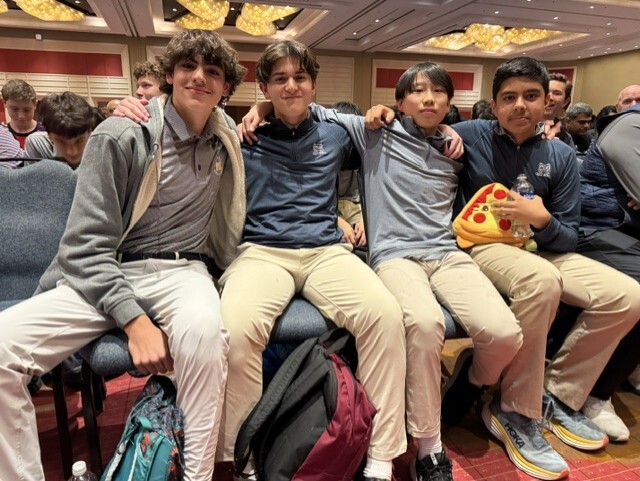
Most recently, at SMU.
The club serves as a chapter in a greater national community where students engage in discussions on a variety of topics.
“It is deliberately a nonpartisan group. They do not endorse specific policies or specific candidates, but they believe in promoting knowledge of the larger world, understanding of global issues,” Hamilton said. “And they take a very broad view of that, so that includes politics, economics, cultural issues, encouraging citizens, business leaders, artists, and then students and young people to be more internationally savvy.”
In the nature of difficult conversations, the Junior World Affairs Council (JWAC) promotes civil discourse while maintaining respect for those with opposing views.
“It’s absolutely not meant to be dividing. It is supposed to be educational and bring people together,” Hamilton said. “It is always programmed and designed to create healthy dialogue and to be welcoming to people of different opinions. And that’s kind of the basis of it, is that we promote a better world for everyone if you have knowledgeable civil debate.”
The SMU Tate Lecture series is just one way that JWAC brings awareness to various topics.
“They bring in many really interesting speakers and they have a student forum that’s open to Area high school students,” Hamilton said. “Whenever they bring in a lecturer. And so we have gone to some of those events as well. When we see someone that makes sense that suits the topics we’re looking at.”
These discussions allow students a view into the lives and perspectives of international government officials.
“We listened to the former prime minister of Britain, and she was talking about the state of Britain, and the state of world affairs,” Hamilton said. “There was a historian, John Meacham, and the editor of the Economist Magazine, commenting on what they see as the state of the economy and global affairs.”
The lecture series provides an alternative learning environment for students that a typical classroom doesn’t include. These unique events allow students to learn what various professions look like.
“I think in going to the SMU lecture or the SMU events, where it’s a question and answer series, you really get to see the personalities of the people in a way that in a former lecture, you don’t,” Hamilton said. “So I think that’s one of the things I like is that people seem very hum they seem very human in these. And so I think it’s a really unique opportunity to get to see some very eminent thinkers and writers and politicians in an informal setting.”
As the sponsor of the club, Hamilton encourages students to broaden their views on world events beyond what they initially knew.
“I look at it as and my role, as an educator, is to expose my students to a variety of different perspectives to ask them questions to get them to think more deeply and refine their ideas,” Hamilton.
The United States is just one country in a global society. As technology and culture advances, solely focusing on the United States in terms of importance risks avoiding the diversity of different cultures.
“We live in a global world. Something that happens in one country does affect all of us. Whether that has to do with economic policies, tariffs, pandemics, environment, military conflict,” Hamilton said. “We do not live in an isolated world, and a better grounding that young people and all of us have in the better understanding we have of the perspectives and realities of other people, like, the more hope that you can have for the future.”