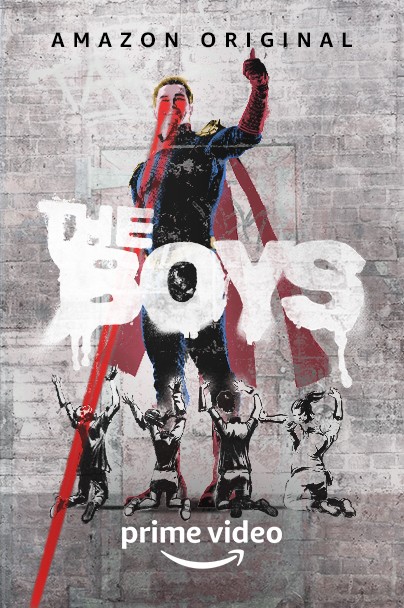
As with most good pieces of fiction, writing the finale can end up being a great challenge for the writers. I’ve seen how even beloved shows fail to send off their series with a bang, such as Stranger Things or Game of Thrones, so when I heard that the final season of The Boys was about to premiere, I began to grow nervous. I was worried that a show that held a special place in my heart would be ruined by the writer’s greed or by a lack of originality. That being said, The Boys is able to not only maintain its identity in its final season, but to explore and expand into new frontiers deemed impossible for “superhero satires.”
To understand why that achievement matters, it helps to remember what this show was and it wasn’t. The Boys never had the cinematic battles that Marvel prides itself on, nor did it have the benevolent role-models of Superman or Spider-Man. But it never intended to. The show began as a satirical answer to a single question: what would the world look like if the superheroes we adored were closer to villains than heroes? With characters like Homelander, The Deep, and Firecracker, it set out to answer that question with comedy, but also with a rare honesty. The show was never afraid to go over-the-top with its action or its humour, nor was it afraid to touch on sensitive territory: psychological trauma, unbearable greed and the intoxicating thirst for power.
The final season continues to provide the viewer with that honesty, and it addresses previous issues from previous seasons such as the lack of character growth and depth. It was never a glaring issue, but characters like Black Noir and Firecracker had long existed more as placeholders for villains than as fully realised people. Season 5 changes that. Both received substantial development that immediately changed my perspective on who they were as people. The Boys has always commented about the rot and evil in modern America, but in its final season it makes room for the benevolence that lives in the beauty of small acts, ordinary people and the constant search for improvement.
The season does not stop at character development. Where previous seasons offered political commentary, the final season embraces it fully. Showrunner Eric Kripke has spoken openly in interviews about drawing on the history of real fascist movements to shape the season’s trajectory, and to leave the viewers with a message. Homelander’s America serves as the perfect metaphor for a U.S. governed by an omnipotent tyrant, but even then the show is able to distinguish itself from other American dystopias by showing the tyrant’s psychological weakness.
Overall, the final season of The Boys serves as a great conclusion and farewell to one of the greatest shows of our generation. It doesn’t stray away from the things it made it stand out and enhances its complexity and storyline by fleshing out its characters.
Overall, A+