

According to the 2022 National Survey of Children’s Health, an estimated 7.1 million children aged 3 to 17 have Attention Deficit and Hyperactivity Disorder (ADHD). This statistic accounts for around 11.4 percent of children in this age group, meaning almost one in every nine kids can have ADHD. In class, ADHD can cause a lack of concentration and an increase in hyperactivity, leading students to struggle with academics or balance outside of school.
“ADHD is basically a lack of dopamine in your brain,” Director of Marksman Wellness Center Dr. Gabby Reed said. “Dopamine helps us pay attention to things that we care a lot about.”
To be able to keep students, both with and without ADHD, engaged, Reed believes that teachers have to use different tactics to rest the students’ minds, especially during long periods.
“In Middle School, a lot of teachers give a break in the middle of class,” Reed said. “They have a 10-minute break, so they do two 30-minute sections most of the time. Teachers are encouraged to use 70-minute periods to do things that are kind of out of the box.”
Out-of-the-box teaching includes interactive activities such as debates, discussions, group projects and presentations. These interactive activities help students dive deeper into the curriculum and enjoy learning new material while keeping them active.
Reed said attention problems become more noticeable during longer class periods, especially if the lesson involves extended lectures or repetitive work.
“Let’s be honest, not every class is super interesting,” Reed said. “So for an ADHD student, a 70-minute lecture can feel like climbing uphill.”
Even for students without ADHD, Reed explains, the brain’s attention span is limited. She supports the use of the Pomodoro method, a study method based on 25-minute intervals of focus and short breaks in between.
“After around 25 minutes, attention starts to decline for everyone,” Reed said. “That’s not just ADHD brains, that’s all brains. But ADHD students feel that drop off even more sharply.”
Despite the challenges associated with them, Reed said she believes the long periods ultimately benefit students by helping them build endurance for future scenarios.
“College classes are 60 to 90 minutes, and life is full of long meetings,” Reed said. “We have to train our brains to handle that kind of focus. It’s hard, but it’s preparation for the real world.”
For junior Caleb Ratcliff, working at places other than school, such as Central Market, helps him focus when he needs to get work done or study for an upcoming test.
“It makes me feel at home, even if I take my meds and really try to focus, when I go somewhere else,” Ratcliff said. “It doesn’t have to be Central Market, but it makes me take initiative. When I’m in a formal place, I have to take my own initiative and do the work.”
However, balance is still an issue that students with ADHD have to overcome. Whether it’s school, sports or friends, trying to maintain a balanced schedule brings many challenges. Ratcliff, however, tries to take advantage of his multiple responsibilities.
“It’s really hard to balance sometimes, but I think sports help in the sense that they are my break from school because sports are my break before I have to go home and do all my work,” Ratcliff said.
As counterintuitive as it may sound, taking breaks is essential to productivity, and it’s essential for students to have relaxing hobbies to relieve the pressures of school and improve mental stability.
“I’ll go in and paint during free periods sometimes, but I think that whole room and everything is just a good mental break from work,” Ratcliff said.
While for some sports may not be considered a ‘break’ due to their physical demand, Ratcliff, a committed rower, finds comfort in the intensity.
“Rowing is probably my favorite thing I do,” Ratcliff said. “Just being out in the water and being kind of away from all the stresses of school is extremely helpful.”
With so many challenges, the school does try to offer as much support as possible to ensure that all students are able to keep their lives under control.
“The counseling office has done an incredible job, especially since they’re the ones that really diagnosed me and finished my tests,” Ratcliff said.
Ratcliff emphasizes the quality of the school’s wellness center, as they were able to help him get the help he needed when outside sources were unable to do the same.
“I actually tested negative at a different testing place, but they didn’t do half of the procedure they were supposed to,” Ratcliff said. “So when Dr. Bonsu and M. Petchersky did that, they said that I actually did (have ADHD), and they diagnosed me.”
Outside of school, Ratcliff uses different types of studying methods that help him remain focused and not drift off from his work. Ratcliff believes that these methods help him focus the most.
“Putting myself on a countdown every time before I study helps,” Ratcliff said. “I set a timer for 15 minutes beforehand, and when that’s done, I’m counting down to when I’m going to really start and lock in for studying, however long that is. I think the countdown’s probably the most helpful.”
For Ratcliff, the desire to succeed motivates him to intentionally focus and overcome challenges. While part of that motivation is extrinsic, his main goal is to better himself.
“I think just switching from that lack of focus to, like, such an increase in my performance comes from my motivation to just better myself, as well as like better grades and SAT scores and everything,” Ratcliff said. “It makes me feel at home, even if I take my meds and really try to focus, when I go somewhere else,” Ratcliff said. “It doesn’t have to be Central Market, but (being in public) makes me take initiative. When I’m in a formal place, I have to take my own initiative and do the work.”
However, balance is still an issue that students with ADHD have to overcome. Whether it’s school, sports or friends, trying to maintain a balanced schedule brings many challenges. Ratcliff, however, tries to make the best of his multiple responsibilities.
“It’s really hard to balance sometimes, but I think sports help in the sense that they are my break from school because sports are my break before I have to go home and do all my work,” Ratcliff said.
As counterintuitive as it may sound, taking breaks for relaxing hobbies is essential to relieve the pressures of school and improve mental stability.
“I’ll go in and paint during free periods sometimes, I think that whole room and everything is just a good mental break from work,” Ratcliff said.
While sports are physicially demanding, Ratcliff, a committed rower, finds comfort in the intensity.
“Rowing is probably my favorite thing I do,” Ratcliff said. “Just being out in the water and being kind of away from all the stresses of school is extremely helpful.”
With so many challenges, the school tries to offer as much support as possible to ensure that all students are manage their lives.
“The counseling office has done an incredible job, especially since they’re the ones that really diagnosed me and finished my tests,” Ratcliff said.
Ratcliff emphasizes the quality of the school’s wellness center, as they were able to help him get the help he needed when outside sources were unable to do the same.
“I actually tested negative at a different testing place, but they didn’t do half of the procedure they were supposed to,” Ratcliff said. “So when Dr. Bonsu and Ms. Petchersky did that, they said that I actually did (have ADHD), and they diagnosed me.”
Outside of school, Ratcliff uses different types of studying methods that help him remain focused and not drift off from his work. Ratcliff believes that these methods help him focus the most.
“Putting myself on a countdown every time before I study helps,” Ratcliff said. “I set a timer for 15 minutes beforehand, and when that’s done, I’m counting down to when I’m going to really start and lock in for studying, however long that is.”
For Ratcliff, the desire to succeed motivates him to intentionally focus and overcome challenges. While part of that motivation is extrinsic, his main goal is to better himself.
“(Having) such an increase in my performance comes from my motivation to just better myself and get bettter (at) everything,” Ratcliff said.
Students manage attention issues
Marksmen and teachers remedy attention differences with novel approaches.
October 31, 2025
Categories:

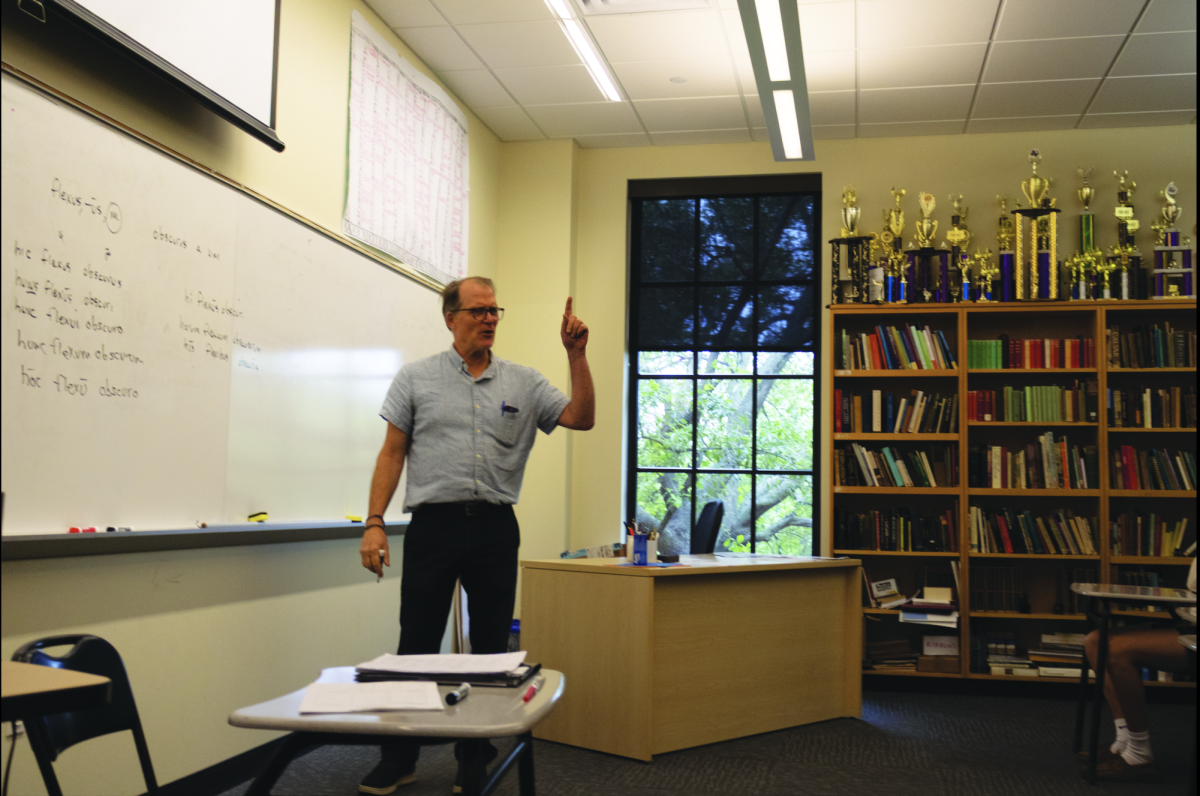
Difficulties with paying attention impact performance in the classroom.
More to Discover



About the Contributors
Emiliano Mayo Mejía, Digital Managing Editor/Reviews Editor
Armaan Newaskar, Assistant Web Editor
Wes Jackson, Sports Editor