

In 2017, 30 percent of children in Dallas lived in poverty. Yet, by 2024, that number had reduced to 19 percent.
Such a rapid decrease was unprecedented, and Dallas led all major cities in the United States with a population of above 1 million in reduction of child poverty between 2023 and 2024.
While many factors and people contribute to such a vast change, one prominent leader of the effort to eliminate child poverty was Alan Cohen ’01.
After graduating from St. Mark’s, Cohen attended Tulane University and got a Bachelor’s in Sociology. He later received his MBA from the Kellogg School of Management at Northwestern and worked as Marketing Manager for Mars Inc.
Although Cohen never personally experienced poverty, once he stepped out of his bubble and realized how many students had grown up unable to read at grade level, he was shocked. That understanding pulled him away from the corporate world and into public service.
“If there were 70 out of 100 St. Mark’s eight graders who couldn’t read at grade level, there would be a crisis (at the school),” Cohen said. “I did some research and found out that a lot of the issues I cared about in the world stemmed from a lack of quality education.”
Cohen moved back to Dallas and immediately began working with the Dallas Independent School District He spent years in coordinating with them, focusing on developing an education strategy for young children. In this role as Executive Director of Dallas ISD Early Childhood and Community Partnerships, he discovered that many of the educational issues that plagued children were much more systemic than he originally thought.
“I found out that most of the educational problems kids have were deeply intertwined and all essentially boil down to larger issues like missing basic needs, inconsistent housing, education or lacking safety in their neighborhood,” Cohen said. “Kids are actually incapable of not learning. They’re going to learn from every experience that they have inside and outside of the classroom, so it’s insufficient just to focus on schools alone. I realized that if I wanted to have an effect on kids’ lives in the long haul, I was going to have to work on these big issues.”
As a result of his substantial work in public education, Cohen received a call from the mayor of Dallas at the time, Mike Rawlings, who wanted Cohen’s expertise on how to address these crucial issues. At the time, Dallas had the highest poverty rate out of any major city in the United States.
“Dallas is my hometown,” Cohen said. “When I found out that a third of the kids in the city I am from were growing up in poverty, I took that personally. I could have gone my whole life in the neighborhood I was growing up in, and I could have lived my whole life in Dallas and never seen poverty because it concentrates in certain neighborhoods. It’s important that we realize there’s a huge problem.”
So, Cohen took a larger role in his fight against financial inequity in Dallas. He served as co-chair of the Dallas Mayor’s Task Force on Safe Communities and also serves on the board of various nonprofits throughout the city.
His most impactful work, however, was founding the Child Poverty Action Lab (CPAL), of which he is currently the Chief Executive Officer. CPAL focuses on using data to guide local, city and county officials on best areas and policies to maximize community change and reduce poverty.
“Data is a superpower. We’re the research and development department that provides information so governments know what to do and where to target,” Cohen said. “Dallas is a place where we can get a lot of big things done because there are lots of really good people with resources who would be willing to take action if they could see a path forward, so it just felt like a chance to connect some of those dots and that’s kind of why we got started.”
Cohen and CPAL focus on five key issues to reduce childhood poverty: housing, criminal justice, child safety, benefits delivery (helping impoverished people access programs and funds that can benefit them) and maternal health. Targeting these five issues in particular has led CPAL to the best results in reducing child poverty in Dallas.
To get maximum results though, Cohen and CPAL enlist help from individuals who are passionate about a particular issue. By researching something that interests them, people can make an impactul change while also having fun.
Arjun Poi ’25 and Rahil Panchbhaya ’25 conducted a research study on the impact of junk fees in the Dallas rental market over the summer of 2024, finding out how hidden costs make housing much less affordable and exacerbate poverty in Dallas.
“I found the idea of using data to solve real world problems and come up with unique and targeted solutions really interesting,” Poi said. “My work can help drive change if policy leaders look at it and change the law to make the housing more transparent and affordable for renters.”
As CPAL grows and continues to make a larger difference, Cohen plans to expand his goals and reach. He has set his sights on halving Dallas child poverty in the next generation, a goal which is now reasonable with Dallas’s unprecedented child poverty decline. He also plans to expand CPAL across the state and eventually nationwide, with new locations opening in cities that will be announced in the near future.
“Making a difference like this is so rewarding, and once we get going on a large scale, there’s no telling what we can do,” Cohen said.
Alumnus leads fight against child poverty in Dallas
Alan Cohen ’01 helped drive Dallas’s unprecedented drop in child poverty rates through data-driven analysis, and now he sets his sights on Texas and beyond.
December 12, 2025
Categories:
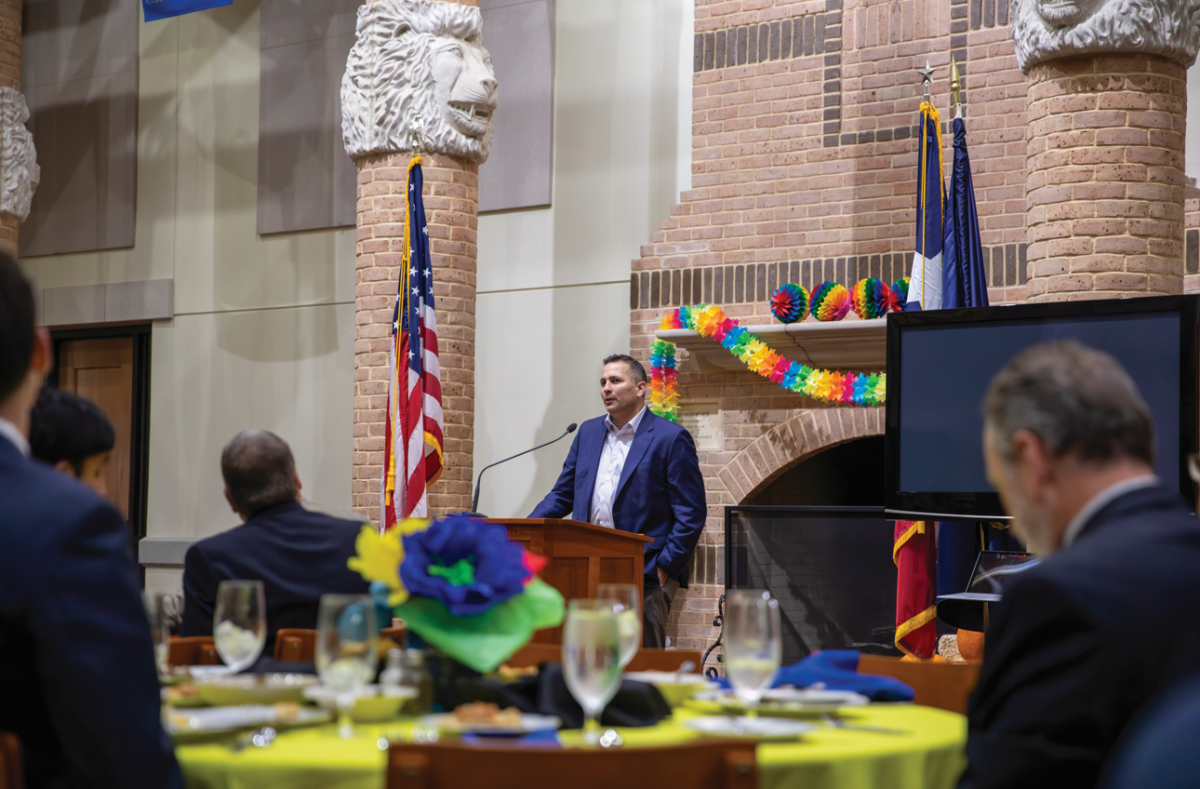
Alan Cohen ‘01 speaks at an alumni reunion.
More to Discover


About the Contributor
Rishik Kapoor, Web Deputy Editor