
On average, current college students face more than $35,000 in student debt after graduation, according to the Education Data Initiative.
That number only continues to grow.
In 2025, according to the Bureau of Labor Statistics, roughly 42 percent of college graduates were considered underemployed, working jobs that didn’t require a college degree. These individuals consistently experience higher unemployment rates than the national average.
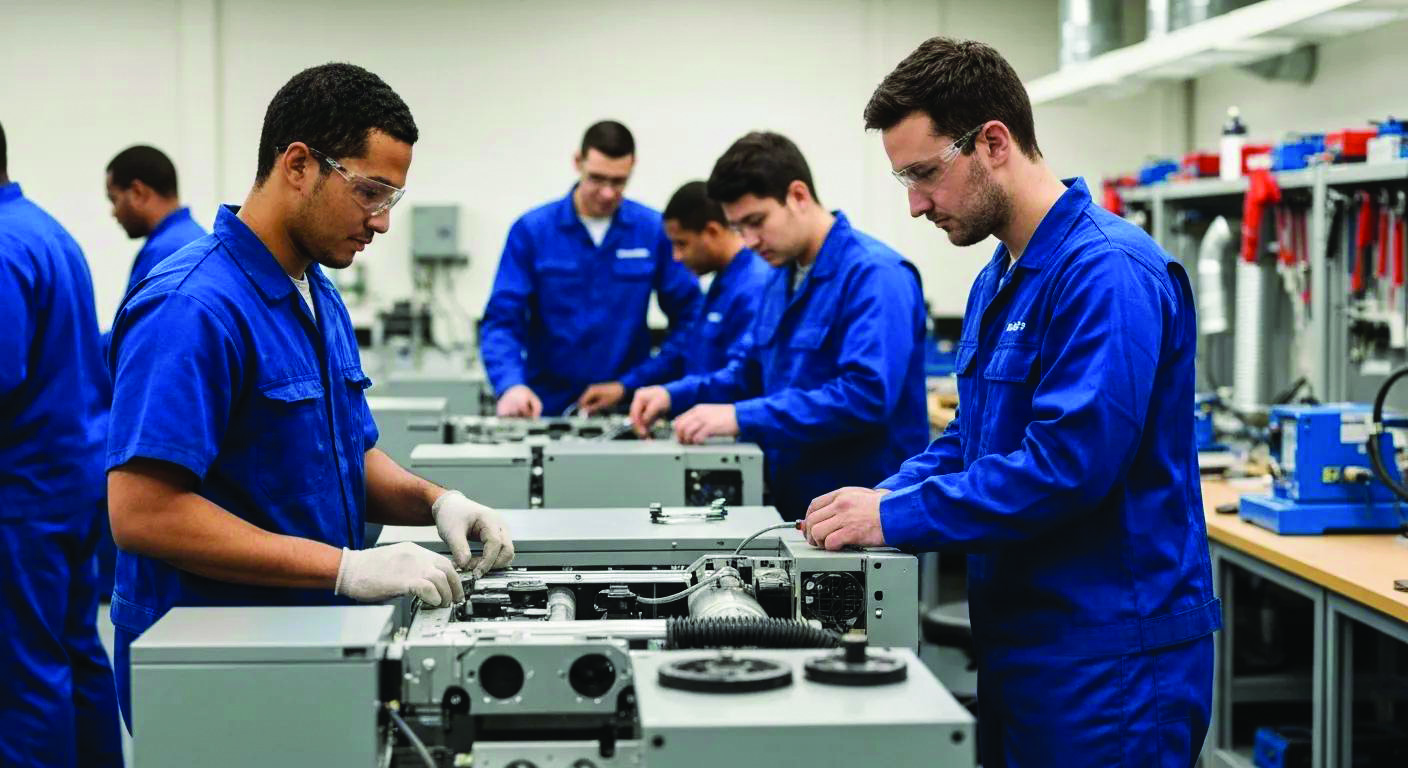
And so in today’s economic climate, it’s not surprising that many are opting instead for trade schools that offer an immediate pathway to six-figure jobs without crippling debt.
Vocational schools, commonly known as trade or technical schools, are mostly post-secondary and sometimes secondary educational institutions that provide technical skills focused on a specific profession, and students usually take two years or less to complete their education. In many countries around the world, vocational school is a very common option, but in the U.S., four-year universities have been the dominant choice for higher education.
Historically, going to trade school and pursuing a trade has been seen as a less desirable option than going to university and gaining a bachelor’s degree or higher because the blue-collar jobs that tradespeople work in are seen as more labor intensive and less lucrative than the typical white-collar job.
“What we need to do is to encourage people to study things that are appropriate for them, and there shouldn’t be any kind of social stigma attached to it, which there is currently,” History and Social Sciences Department Chair David Fisher said. “If you have just an ‘AA degree’ and it’s in plumbing or HVAC maintenance and so forth, culturally, that’s not seen as achievement oriented as getting a bachelor’s degree.”
Malcolm K. and Minda Brachman Master Teaching Chair Martin Stegemoeller echoed this belief, recalling the stigma behind trade schools during his high school years.
“There was a sense that trade schools were unfair,” Stegemoeller said. “That you’re sending kids into ‘dead end jobs’ and not giving them the luxury of the sky. So a lot of trade schools were erased, shop programs in high schools were cut and the idea was that everybody’s supposed to go to a normal college. I don’t think that served people well.”
Even with lingering cultural sentiments, the attitude toward trade jobs and trade schools is changing. Wages are climbing as the supply of workers continues to decrease, and the idea of blue-collar jobs being “dirty” has diminished as technology has made even the most labor-intensive jobs more technical. As people begin to question the value of a four-year university education that saddles students with mountains of debt with no guarantee of a stable job, the two-year trade school option with a quick pathway to a decently-paying job is looking more and more appealing.
“There’s also been a lot of chatter in the press and in the media about how ‘useless’ university education is,” Fisher said. “And on one level, it’s true that university education is in many ways inefficient.”
Although individuals attending trade schools miss out on the social aspect of university life — an aspect that many college students value greatly — at the end of the day, Stegemoeller believes that the majority of students do not benefit intellectually from going to a traditional four-year school.
“I would say that, in my opinion, for whatever it’s worth, the average kid going to college leaves college worse than when they entered,” Stegemoeller. “The professors care so little. There’s no coherence to the curriculum, and it’s so easy to game the system to get a good grade without learning anything.”
However, Fisher notes that pursuing a university education is still never a bad idea for those who can afford it, and it remains the most fitting option for most people, even if trade schools provide a good alternative for some.
“If you go to university, you will get a salary bump,” Fisher said. “It is worth it 99 times out of 100 to go to university and to get an advanced degree. Now, does that mean that we shouldn’t be encouraging more people to pursue trade school or pursue routes in tertiary education that aren’t necessarily academic? No.”
Ultimately, it’s the students’ responsibility to ensure that they make the most of their four-year education — and the unfortunate reality is that many college students simply aren’t motivated to study.
“The true student still needs a great four-year college to learn their science, to learn math and to learn how the world works,” Stegemoeller said. “If you’re self-motivated to learn, and you’re going to a good college, you can just tear it up. And that’s still possible today. It just seems fewer and fewer kids are actually in that category.”
As an economics teacher, Fisher also believes that from an economic standpoint, there should be more people pursuing trade schools and working in the trades to help the economy function at its best.
“Anything that improves your productivity is good for you and good for the country as a whole, and if we can make access to education or training that allows people to increase their productivity in a manner that is as efficient as possible, that’s a good thing,” Fisher said. “So all else being equal, I would rather see people go into tertiary education and find a way to improve their productivity in areas where they’re likely to get a job.”
Another incentive for pursuing the trades in today’s world is the threat of artificial intelligence to white-collar jobs. In general, skilled blue-collar jobs seem to be much more secure.
As trade schools face a future where they stand to become more and more popular, Fisher hopes that the stigma around blue-collar jobs will decrease and that options will open up more for high school students to pursue vocational education in high school, where it is currently limited.
“If the incentives are very clear that getting a plumbing certification is going to ensure that you have a job, then eventually, even with the cultural stigma, you’re going to get more and more people who will do that,” Fisher said. “If we’re reforming education, let’s try to remove some of that cultural stigma. And also, let’s give people the opportunity to start studying those things as early as high school.”
Other than the general criticisms of ostensibly lower pay and increased labor intensity after graduating, one possible downside of trade school education is that it is very focused on a singular profession, allowing for less flexibility and causing some inconvenience if a student changes their mind. On the other hand, university degrees allow for a wider range of possibilities, and knowledge can be gained through job experience.
“See, the issue is (when) you get a bachelor’s degree, you’re getting a general education that allows you to be flexible, and you get the training once you’re on the job,” Fisher said. “But if, for some reason, that job should disappear or change dramatically, you might not have the academic background to be able to train yourself or to think about what you need to do to be able to adapt.”
Both Fisher and Stegemoeller believe that trade schools deserve a spot in the education system — the only real question is how much the government or society should support them.
“Are economists for or against technical education? I think every economist is going to say yes,” Fisher said. “The issue is if we are going to pay for it as a society.”