
It started with a small bet. A few dollars here and there, amounts that seemed harmless.
During his freshman year, a student who requested anonymity and his friends would send picks to each other before NFL games, turning sports betting into something like a group chat pastime. Just $10 every weekend. Nothing serious.
He grew up playing Madden Ultimate Team, opening player packs in hopes of getting lucky, and he loved to watch his favorite teams play. The sports betting apps were everywhere on social media, in advertisements, in conversations between friends. Soon, he realized how easy it was to participate, even underage. All it took was linking a debit card. Looking back, it was a shockingly accessible mistake, one that, according to the World Health Organization, takes tens of thousands of lives each year.
The feeling of winning a bet felt good. Really good. But beyond the money, watching the games was simply more fun, as if every time he turned on his TV his favorite team was playing in the Super Bowl.
But most bets didn’t hit. Sometimes a wide receiver fell just short of the yard he needed. Sometimes the final leg of a parlay missed by a single play. Each time, the money seemed to vanish from his account.
Because the losses came in $10 increments, they were easy to ignore. He just assumed he would eventually win it back.
By the time his father noticed dozens of small charges on the account, the total had subtly amounted to nearly $400, driven by decisions made on the whim of a “what if?”
The legality of gambling is largely determined by state law, and Texas outlawed most gambling forms in 1903 during a period of moral reform, with some periodic exceptions to the ban every few decades depending on economic and political circumstances. In recent years, attempts to legalize sports betting have been made, yet none have succeeded.
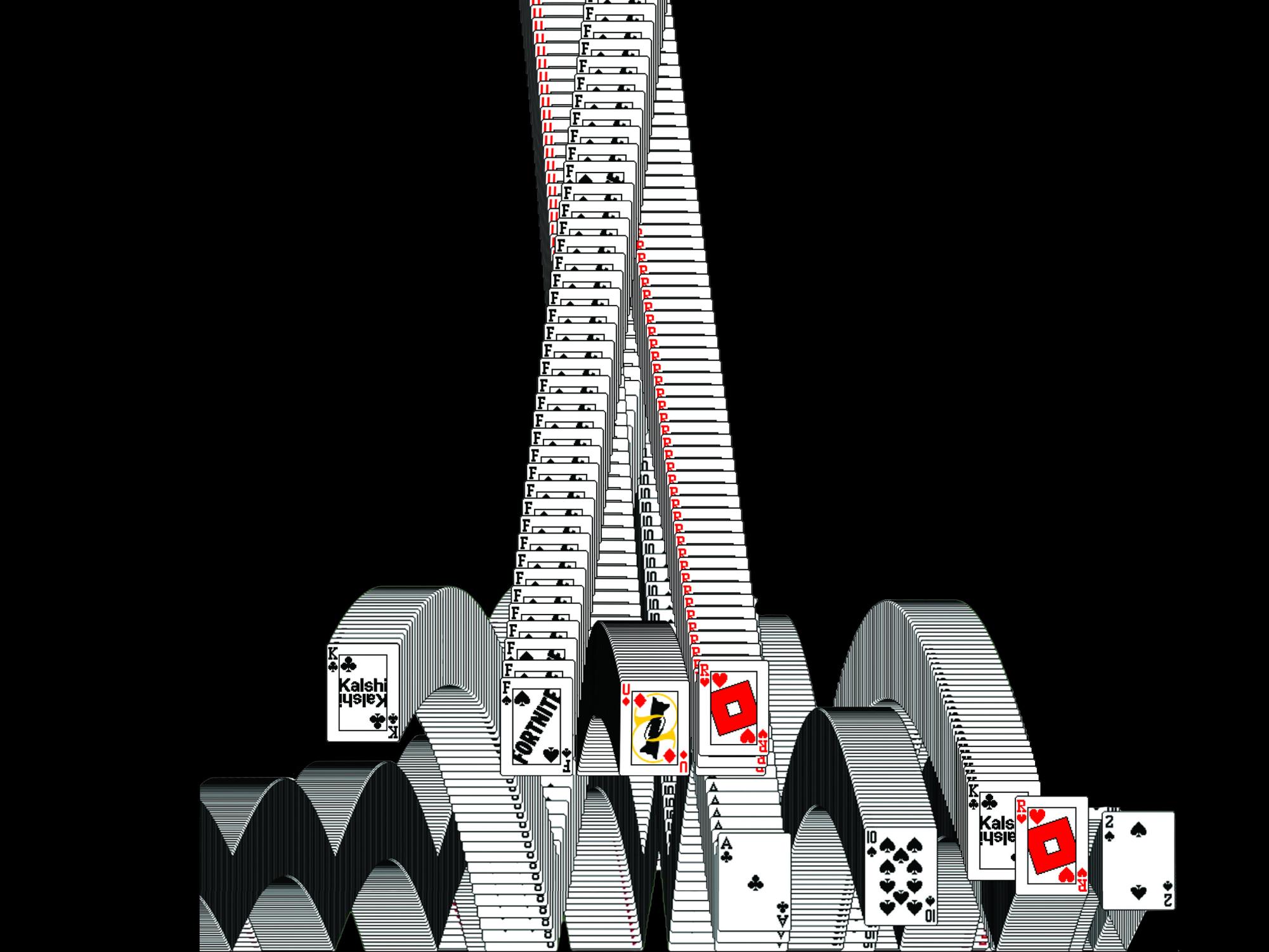
Dozens of platforms, using loopholes to get around legislation, surged in popularity over the past five years. Kalshi is classified as a prediction market and is regulated by the Commodity Futures Trading Commission (CFTC). Instead of placing a bet, users buy event contracts: financial instruments that pay a fixed amount if a specific event occurs. Another prediction market, Polymarket, in particular, operates offshore and uses cryptocurrency markets, making enforcement more complicated for U.S. regulators. Underdog Fantasy and PrizePicks operate as daily fantasy sports (DFS) platforms, which are widely argued to be skill-based contests rather than gambling. These platforms are at the center of ongoing debate and regulatory scrutiny over whether or not sports betting primarily relies on skill or chance. The Texas legislature has no explicit regulation on daily fantasy sports, so they fall into a legal grey area.
In recent years, media outlets have broadcast sports betting sites, prediction markets and DFS platforms at growing rates. Venmo advertises to users to link their account to Kalshi. Social media users can only often scroll through a few posts before coming across a limited offer that some can’t refuse. For a student who requested anonymity, he first got into sports betting at 15 years old after seeing an advertisement for Fliff, a DFS that grew in popularity for offering users daily claimable money.
So he started playing around with those $5. Once he lost, the game would give him. Over and over again.
“I was able to bring that up to $100 twice, and I lost that $100 twice,” he said.
Since then, he has tried out Sleeper Fantasy, another DFS, and Underdog Fantasy, depositing his own money into them. His betting is comparatively disciplined: only a few small $1-5 bets about once a week, justified by a phrase that echoes in his mind.
“No harm, no foul here,” he said.
Yet while they appear harmless, these small increments often add up to a much larger problem later in life.
According to the Director of Marksman Wellness Center Dr. Gabby Reed, gamblers have the highest suicide rate of all forms and types of addictions. So as this normalization and romanticized advertising of gambling continues to pervade pop culture, younger kids can only become more susceptible.
“They say (someone is) four times more likely, if you’re exposed to gambling before the age of 12, to develop a gambling problem,” Reed said.
According to a recent study done by Common Sense Media, gambling has become an increasingly common activity among boys aged 11 to 17. And the gambling isn’t always sports betting or poker. It’s coming from video games.
Researchers have pointed to a gateway effect: the idea that certain game mechanics, such as randomized rewards and in-game purchases, mimic slot machine psychology and normalize risk-reward spending. The suspense before the reveal, flashy animations and ultra-rare jackpot pulls are engineered to make susceptible children want more.
For her son’s birthday, a mother gifted her sixth-grade Marksman a $20 gift card for the popular platform, Roblox. The gift card purchase seemed harmless; the son had been begging for Robux, the in-game currency, for months. With the Robux, he’d finally be able to accessorize his avatar or buy exclusive perks for his favorite game.
But he spent all of it in one sitting. So he asked for more.
There was still so much he needed to buy.
So the mother reluctantly set up a parent account to add money for him, double-checking the account to make sure her child couldn’t spend anything without her permission. She’d heard horror stories about other families who have been in similar situations.
“Once he had money to spend on the game, he couldn’t just enjoy the game without it,” she said. “It turned into a problem so quickly in my mind.”
She already knows that Roblox and many other platforms are designed to keep the player staring at the screen and wanting more. But she also wants her son to enjoy playing games with his friends.
“We didn’t grow up with any of this, so it’s not something where I can relate my own experiences,” she said. “Parents need to be aware of what could happen — screen addiction, wanting to spend money, talking to strangers online. There’s a lot to process.”
Another mother, seeing the influx of Kalshi and Draftkings advertisements on her feed and television, has taken a different approach to how much her child is exposed to. Her fifth grade Marksman doesn’t have access to a phone. Or a computer. Or Xbox. Or any video games at all.
She knows she’s being overprotective by cutting off all access. She lets her son know that the devices and games will be granted in the future, and when they are, she expects him to make smart decisions.
“It’s not easy because a lot of his friends have access to the internet,” she said. “Every family is going to have a different kind of comfort level with exposure and risk.”
The mother stays vigilant and informed, concluding that a majority of the gambling and gaming platforms don’t care for their players’ well-being; she thinks they are purely profit-driven enterprises.
“Candy Crush seems so innocent with its bubbly tiles and pretty colors,” she said. “But after a certain point, even that ‘harmless’ game asks for your dollars.”
Sixth graders Oliver Weil and Carter Reed have noticed that spending money inside video games has become a normal part of how kids their age play.
For Carter Reed, the spending comes with limits set by his parents. Last Christmas, they gave him four $25 gift cards. But if Carter spent the large sum all at once, he might be left wanting even more, so his parents have limited him to one gift card redemption every three months. The restriction keeps him from spending too much or too quickly in a game where purchases instantly change his game performance.
For Weil, the appeal of spending money online is more about fitting in with the people he plays with.
“On Fortnite, I want to match outfits with my friends,” Weil said, “There’s a lot of cool, new cosmetics that come into the shop.”
Still, the pressure to spend can be strong. Weil recalls a time when he had friends come over to play Fortnite on his Xbox, and without his or his parents’ knowledge, his friends spent $100 worth of ‘V-Bucks’ on his account.
When Weil finds something he wants, but doesn’t have enough money to buy it, he’ll have an internal battle of whether he should buy the item without his parents’ permission. And it’s not entirely his fault. With Fortnite having new items and deals in its rotating shop daily, it’s hard to ignore the temptations.
“In-game purchases are really addictive,” Weil said, “The dopamine when you get better stuff makes you feel good. You start winning. You want to spend more.”
Licensed professional counselor Jeremy Edge points to one underlying principle tying loot boxes, sports betting apps, and other digital avenues into the same behavioral loop: variable reward.
“It’s a mechanism where you’ll get rewarded sometimes, but not all the time,” Edge said. “And that’s one of the most addicting behaviors that a person can engage in.”
It’s the same reason a slot machine works. The same reason why someone refreshes their feed. The outcome is uncertain, and that uncertainty is the psychological hook bringing people back for more. For Edge, any platform or activity that uses this randomized reward structure constitutes gambling.
The architecture behind these promotional loops is intentional. And they create a cycle of engagement that’s difficult to break, especially once it sticks.
For executive functioning coach Lester Clowes, the problem is that by the time parents eventually notice the shift in their kids’ behavior, it has usually already taken root. And from his perspective, most parents aren’t even a part of the conversation.
“The majority of parents are completely unaware,” Clowes said. “It’s just not their world.”
His solution isn’t a lockdown. Clowes pushes his parent clients to step into their kids’ digital realms. Learn the games, understand the mechanics and treat them as common grounds. Because he believes shutting everything down erases the opportunity to heighten the decision-making tools they’ll need in the future.
A couple of years ago, Clowes co-led a virtual conference with Dr. Bobo Blankson of Young Men’s Health and Wellness. Gaming executives attended, including a Vice President of a company with a portfolio built entirely on gacha games. And even she wished for parents to take that step forward to learn what their children were playing.
Clowes’s mission is to make that risk more legible.
“Gambling can be a part of a healthy, purposeful life,” Clowes said. “It just can’t be the purpose.”
Edge takes a similar stance with parents who happen to discover that their children are developing gambling tendencies. For him, it’s to ask questions. To begin building understanding through curiosity instead of control.
“It’s very natural for parents in that situation, like, ‘holy crap, they’re addicted,’ and get really worried and anxious and try to maybe put up a lot of restrictions or come down hard,” Edge said. But that impulse, he argues, backfires. “It robs us from understanding our kiddo, and it also takes away the opportunity to build trust and to guide and to teach.”
From his experience, adolescents who feel shut out won’t be willing to open up but tend to go in the opposite direction. But still, even with the right familial frameworks in place and conversations taking place at home, both Clowes and Edge acknowledge the culture surrounding gambling isn’t making the job any easier.
That being said, Edge has seen early signs of digital literacy among younger generations — teenagers who are beginning to question making another parlay. Another wheel spin. Another impulsive purchase.
It’s just that the gambling industry is still expanding rapidly, and the gateway through which young people reach that point — loot boxes, random packs, in-game microtransactions — are still everywhere and hardly regulated.
“I think it could become problematic before it gets to a healthier place first,” Edge said. “It’s exciting, it’s new. There’s so much out there to bet on and to draw businesses to make money on. So I think that’s going to be where it’s going to be tough to fight against, because businesses and companies are going to be pushing that to make a buck.”
With the continued saturation of gambling, Edge estimates it’ll take half a decade, maybe longer, before the awareness culture catches up.
Clowes sees this change through the lens of financial vocabulary. To teach people what they’re actually risking to lose. To make hundreds of dollars means something beyond a number on a screen or a parent’s credit card. Because without that fluency, the brain has nothing to flag. The money stays abstract. And abstract money is easier to spend.
“We can’t just tell kids that this is bad to do,” Clowes said. “It doesn’t work. Never worked. But giving kids the tools and language and frameworks for them to realize, ‘Wow, I’ve given my agency away,’ that’s when real behavioral change starts.”