2-37.
That was the Austin College the baseball team’s record when Dennis Kelly, head coach of the Lions’ varsity baseball team, was a freshman. Starting off with 37 losses out of 39 games, the team had nowhere to go but up. Following Carl Iwasaki’s promotion from assistant to head coach, the team improved, reaching nine wins the following season.
Then 10 wins.
Then 19 wins.
And the year after Kelly graduated, the Kangaroos won their conference championship with a 22-25 record. While the improvement may not be exponential by any means, slowly racking up more wins eventually helped them achieve their goal.
While most players and coaches focus on improving the physical side of their performance, what changed the Kangaroos from an underperforming team to conference champions was Iwasaki’s game-changing focus on mental imagery, which led Kelly and his team to success.
“He brought in a sports performance psychologist to take us through some exercises one day.” Kelly said. “I didn’t fully buy it yet but I believe we have to know what to do intellectually so we can do it physically, just the visualization part was a little murky to me.”
In Kelly’s freshman year at Austin College, he hit .271, capping off a solid first year. But he knew he could improve, that he had more in him than just being good.
Ten minutes into an hour-long spin class, Kelly had no idea how he could suffer through 50 more minutes of biking in a heated room, doing sprints, going up hills and changing the intensity throughout. While he could’ve fixated on the slow-burning exercise, how Kelly spent these next 50 minutes took him from being the good player he was to the great player he wanted to be.
“I think it was accidental. I just went somewhere else mentally and I started playing highlight reels of myself in my mind,” Kelly said. “Sometimes they were real and sometimes I was seeing myself making diving plays, throwing guys out, stealing bases and hitting doubles. It helped me get through the class and I felt better at the end.”
With nothing to lose, Kelly put his trust in Iwasaki’s philosophy, leading to a greater understanding of the mental side of the game and an even greater boost in his stats. His average went from hitting .271 to a mind-blowing .436, a near-exponential improvement mainly due to his newfound focus on visualization. All it took was experiencing success before it happened.
“Your brain creates images of what is going to happen and gets comfortable in those images,” mental performance coach Kevin Guzzo said. “Now when it actually happens, there’s more of a sense of calm that overcomes you, because your brain feels like it has been there before.”
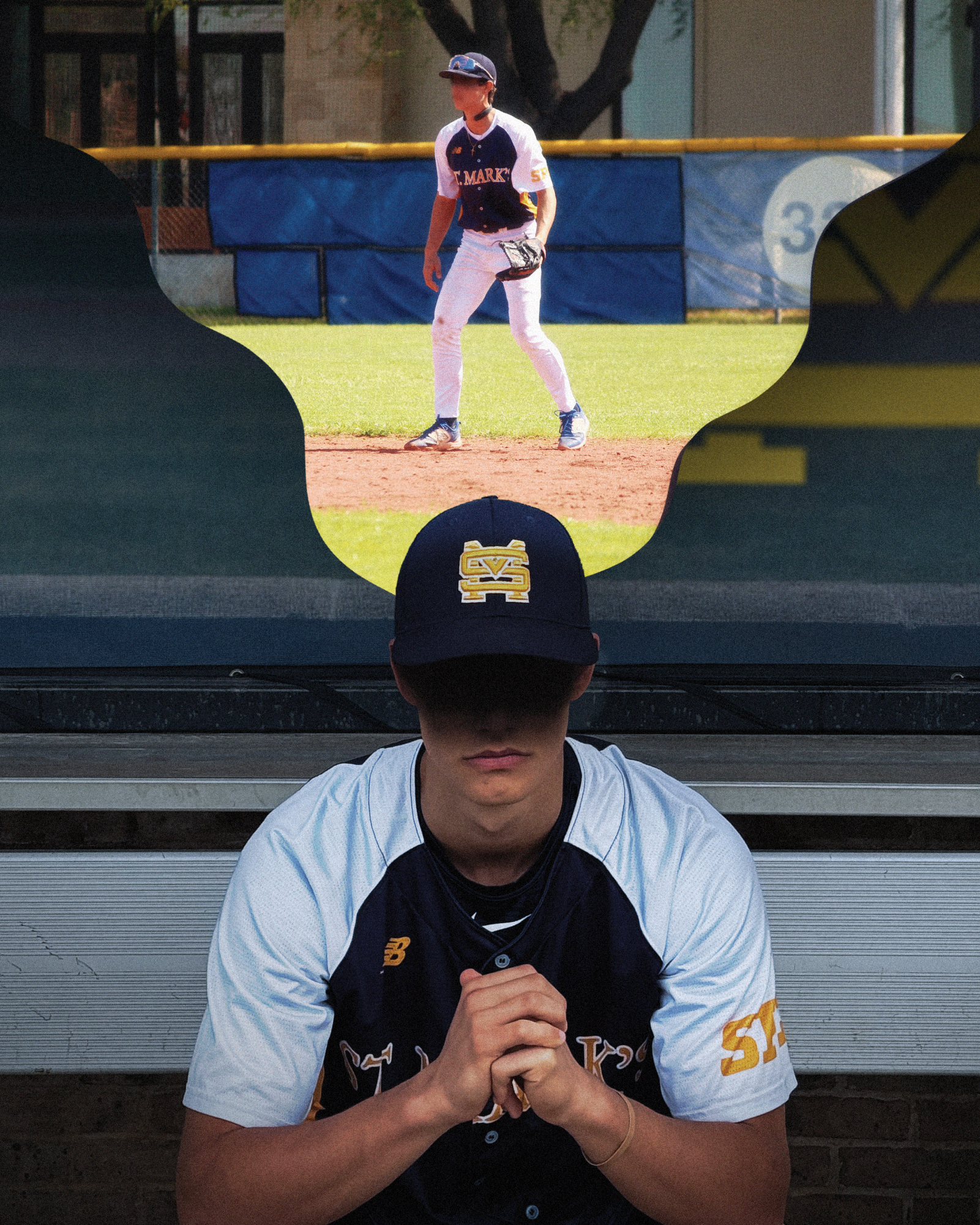
Not many athletes incorporate mental imagery into their routine, relying on physical attributes and mechanics. While the physical side of sports is still of huge importance, the mental side is often overlooked. Envisioning routine or clutch plays repetitively in one’s mind helps athletes see success before it happens, leading to more confidence and less stress on the field or court.
“If you’ve watched a horror movie before, at some point you’ve jumped,” Guzzo said. “How does that happen? Your brain thinks it’s in the moment and can’t tell the difference. That’s the power of mental imagery: getting yourself to believe you’re in a moment, leading to more confidence and comfort in the real moments.”
The most important part of developing an athlete’s mental game is having a consistent routine. And the key to building a beneficial routine is consistency. Simply “daydreaming” about success and envisioning executing plays at random doesn’t help anything.
Guzzo creates an eight to 10-minute audio track for his athletes, recommending they use it at least three times a week. Starting off with some full-body breathing and meditation, he wants to calm the player down as much as possible. This sense of relaxation and focus is a vital component of every sport, and when mastered, the game can begin to “slow down” for athletes.
Then, continuing with some positive affirmations, Guzzo reinforces the players’ positivity and invokes a sense of confidence necessary to succeed. The brain focuses on negative outcomes 20 times more than positive, so Guzzo wants athletes to reframe their thinking and get rid of any negativity.
After the warm-up is done, Guzzo’s athletes look back to their previous games, reliving uplifting moments of success.
“Visualization isn’t just seeing the game in your mind, the most important part of mental imagery is invoking the senses,” Guzzo said. “Can I smell the popcorn being popped at the concession stand? Can I hear the parents, coaches and players? Can I feel the sweat dripping down my back from the heat?”
Invoking as many senses as possible makes the visualization feel the most real, capturing the athlete in the moment. After Guzzo has his players look back on previous moments of success, he has them not only picture, but truly envision future competitions.
“Some people might only visualize success, but I like to visualize success and a mistake, no, not the mistake, but how you recover from the mistake,” Guzzo said. “Because we all know we’re going to make mistakes, and we want to see ourselves having good body language, having that ‘so what’s next?’ mentality.”
Not many athletes want to think of failure while practicing mental imagery. Watching oneself fail, then focusing on the response and adaptation to the mistake, builds character and reminds players that not every moment in a game is going to be perfect.
All athletes get caught up in the past. They get stuck in the realm of what they could have, should have and would have done differently. Living in the moment, makes every second the most important second of the day. Putting maximum effort and focus into not only every physical rep, but every mental rep too, took a 2-37 team and led it to a conference championship.
“I love the acronym WIN: What’s. Important. Now,” Guzzo said.