Nearly one in every five children is not enrolled in a traditional public school. It hasn’t always been that way, but over the years there has been a notable shift away from public institutions.
After the COVID-19 pandemic, confidence in the public school system dropped. As parents observed the education their children were receiving, some didn’t like what they saw and decided to move away from public schools. This trend has resulted in an increase in enrollments in alternatives to traditional public schools.
Additionally, regional movements toward school choice legislation, exemplified by the recent introduction of the Texas Educational Savings Account (ESA) program, have increased in popularity. Many parents view this kind of legislation positively, especially when framed as a push for parents to have more of a say in their children’s educations and more freedom to choose where they go. However, others note that these efforts could be undercutting funding to the public school system, which will also lose money simply by having less students due to the fact that they are funded per pupil.
As a result, while public schools still enroll the majority of students in the United States, alternative forms of education have seen marked increases in enrollment.
“The most common aspect of what’s often been attributed to this decrease in traditional public school enrollments and increase in alternative enrollments is that a lot of parents were not happy with the way that traditional public school systems responded to COVID-19,” said Dr. Daniel Bowen, an associate professor in K-12 Education Leadership and Policy at Texas A&M University. “This specifically refers to the notion that a lot of parents were discontented with some schools taking quite a bit longer to transition back to in-person instruction, as well as some of the (parents) not being very satisfied with the types of instruction that were being provided, for students who were staying home and receiving instruction.”
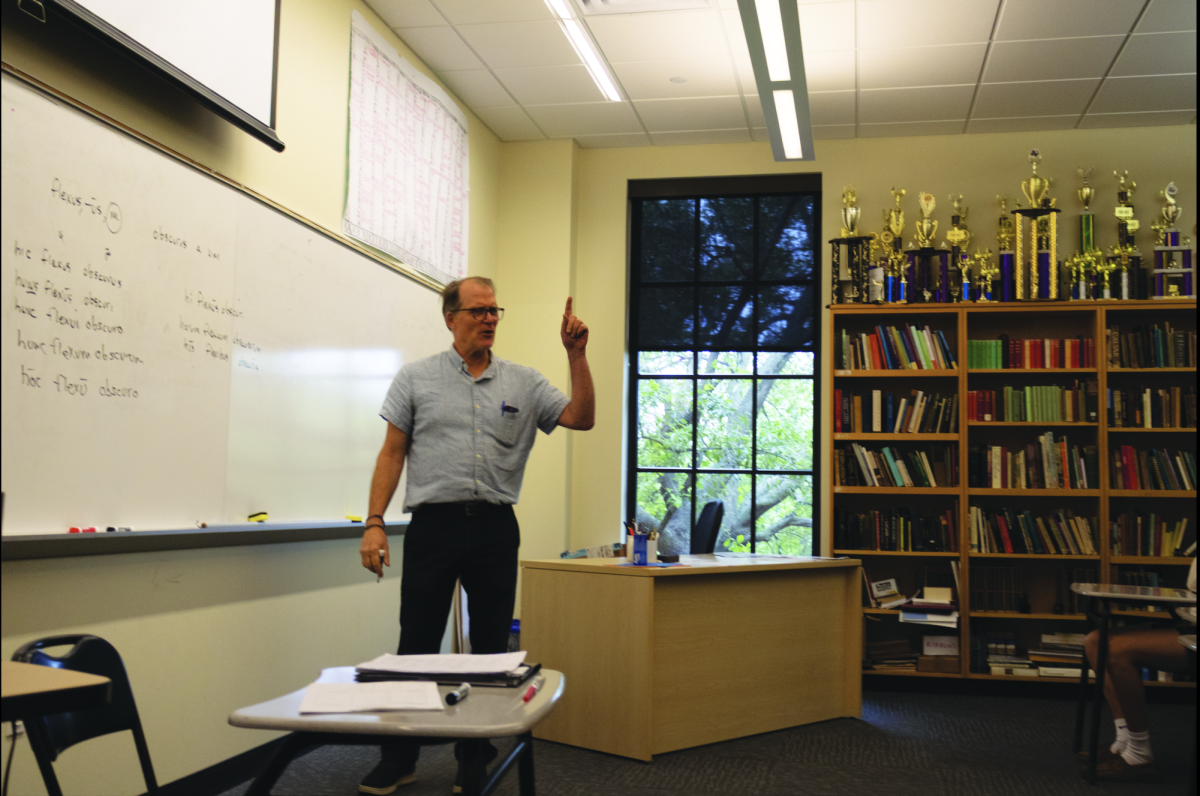
Despite these developments, St. Mark’s in particular has not seen a significant increase in applicants, with the 2025-26 application season receiving slightly more applications than previous years.
“The school continues to receive increased interest,” Director of Student Recruitment Korey Mack ’00 said. “But I would say that this year saw an increase in the number of applications by maybe 2 to 3 percent.”
The various options parents have turned to include familiar forms of education like private schools and more recent phenomena like “microschooling.” Generally, the most popular options include charter schools, private schools and homeschooling.
Charter schools are institutions that are publicly funded but allowed to operate with more autonomy compared to traditional public schools. This flexibility allows some of these schools to focus more on certain aspects, provided they meet performance requirements stated in their “charter” agreements. According to the National Alliance for Public Charter Schools, nearly 4 million students across the United States are enrolled in charter schools. The charter school system has grown significantly since its beginnings over three decades ago.
“Charter schools originated back in the early 1990s,” Bowen said. “They were actually primarily started by teachers unions who wanted more independence and autonomy to run public schools in ways that they saw fit. They slowly developed and spread throughout the early to mid nineties and really took off especially in the early 2000s.”
Perhaps the main reason some parents are enrolling their children in charter schools is the vast diversity of options they provide. Some focus on areas such as the arts, while others focus on STEM or a special teaching methodology, allowing parents to pick and choose what they want for their children. Many schools are part of large networks of schools run under a single brand, while others are standalone schools supported by local communities. Whatever the case, the diverse charter school landscape can be appealing for many parents.
“I think it’s just incredibly difficult for traditional public school systems to provide exactly what different parents are seeking for their students’ education,” Bowen said. “So charter schools have kind of been able to come in and provide certain wants and needs for particular students whose parents just didn’t see the traditional public school system as fitting their particular sets of needs.”
In Texas, one of the largest charter school networks is the IDEA Public Schools system. According to Texas Public Charter Schools, more than 420,000 students are enrolled in charter schools in Texas out of an estimated total of nearly 6 million students enrolled in the Texas public education system.
Private schools have long been a popular option for parents seeking a different education and willing to handle the price tag. More recently, school choice options offered by local and state governments, exemplified by private school vouchers, have aimed to lower the price barrier and to open more opportunities for parents to enroll their kids in private schools. Private schools continue to see a steady increase in enrollment after the pandemic, currently having around 5 million students nationally.
Traditionally, many private schools were and still are religiously affiliated, seeking to add a spiritual component to education. At the same time, some of the most “competitive” private schools are elite prep schools that draw parents looking to send their kids to the best universities. All this goes to show that, like charter schools, private schools have a diverse range of goals and can be well-suited to certain types of students.
“Having taught in public schools before, and this is my 10th year here, I can say that I think the school is unique,” Mack said. “Some of those characteristics are by virtue of being a private school, but other characteristics — like the single gender education — is certainly a distinguishing feature with St. Mark’s education.”
All around the nation, school voucher programs have been implemented in certain states to allow more parents to enroll their children in private schools, aiming to increase “school choice”.
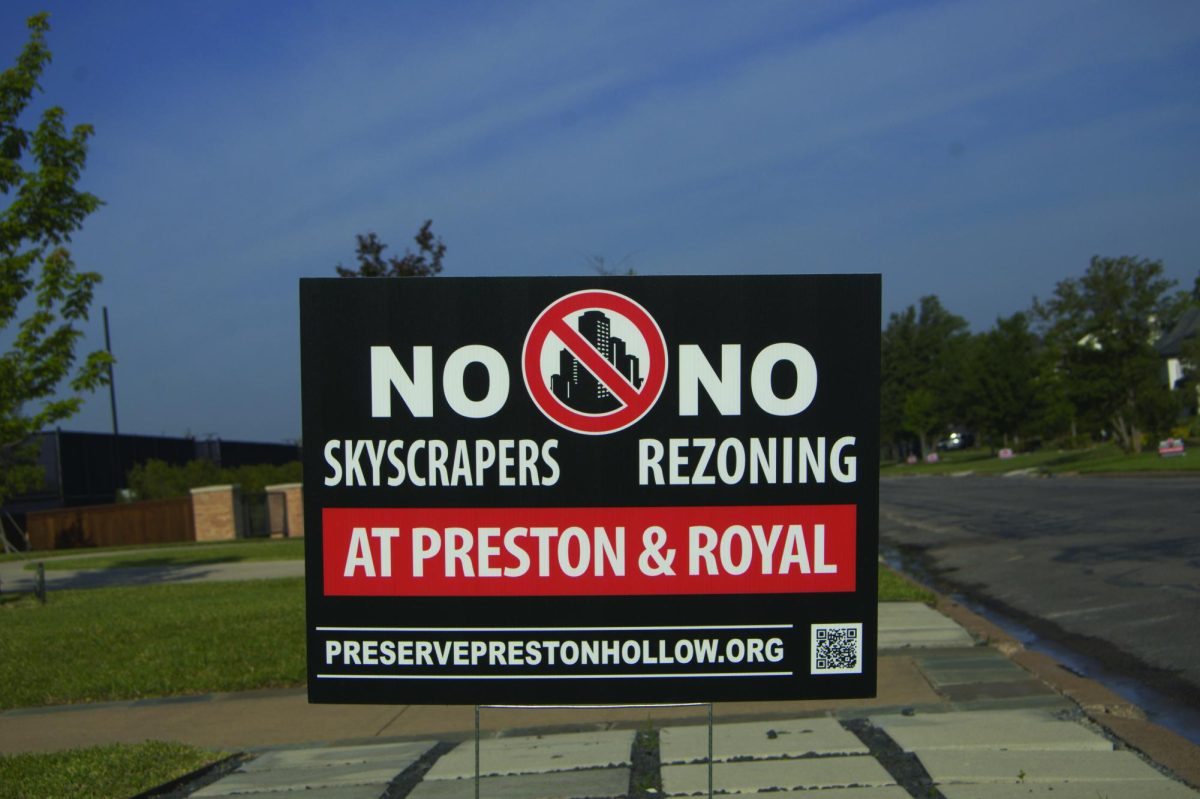
The most prominent example is Texas’ ESA program, officially the Texas Education Freedom Accounts (TEFA) program, which will provide recipient families with an average of around $10,000 to go towards education. The program was signed into law in May 2025 and is set to begin starting in the 2026-27 school year.
“The general idea here is that funds are made available to parents who can then use that to ultimately enroll in private schools,” Bowen said. “When that becomes available, you’re providing greater resources, and then that means that private school enrollment is less financially costly. That makes it a much more viable option for those parents.”
Texas’s new program received a record number of applications after opening in early February of this year, with the current number of applicants over 150,000 and increasing. The system is also more flexible than traditional school vouchers, as the money awarded can go towards school materials, tutoring and other forms of academic support instead of only for paying a tuition. Texas’s new program will be the largest school choice experiment in the country, and policymakers around the country will be looking towards Texas in the next few years.
Based on past trends observed in other states with school voucher programs, Bowen believes that Texas’s ESA program will be a boon for private school enrollment after its introduction in the 2026-27 school year, especially considering how it prioritizes certain demographics.
“Similar to what we’ve seen in other states, there is going to be a massive increase in terms of private school enrollments that happen, because of the way that (the government) designed the education savings account award system to where it primarily gives first priority to students who are from lower income families and students who are receiving special education services,” Bowen said.
However, like other programs nationally, Texas’ new program has faced some opposition. Common criticisms of school choice legislation take aim at the idea that these programs take away funding from the public school system and don’t help poorer families enough to cover the cost of private education while still benefitting those with more resources. However, Texas’ average award of $10,000 to families is relatively large compared to other states, so it could possibly benefit many more families.
“Texas is setting their savings accounts at a higher level than what other states are, so presumably that will promote more access than what we’ve seen in other parts of the country,” Bowen said. “But the extent to which that actually happens is kind of going to be a determined thing that we won’t actually get to see until this thing gets put into action.”
Overall, private schools have remained a robust alternative to public schools, experiencing a small but steady increase in total enrollments postpandemic. Recent school choice legislation in certain states, especially Texas, will likely increase enrollment in those regions in the direction of private schools.
“Private schools are able to have smaller class sizes, a greater faculty-to-student ratio and we’re able to allocate courses to programs in unique ways that not all public schools enjoy,” Mack said. “The school is fortunate to have the resources to be able to pay for those auxiliary needs that it requires to operate programs like our sports program and our wilderness program.”
Education at home or outside of any sort of physical school has seen a precipitous rise in popularity post-pandemic as well as a diversification of options. Parent-led education is legal across the nation and is generally what people think of when speaking about “homeschooling”, but entirely virtual schools and other options, like micro-schooling, that also involve education at home have gained traction as well. The reasons for pursuing homeschooling have always varied by family, and the prevalence of the practice is different by region, but the overall increasing trend is clear.
“I think some parents maybe took on a little bit more ownership of their students’ learning during (COVID).” Bowen said. “Some parents started to maybe enjoy being a little bit more involved and started weighing the trade-offs of spending less time on or leaving their current jobs altogether to take on the responsibilities of providing education for their kids.”
The introduction of online schooling due to the closure of schools during the pandemic opened the door for parents to analyze the viability of education at home. By demand and necessity, technologies adapted to provide virtual communication tools and online sources for education.
Virtual schools are now a widely available option, with many different and independent programs and structures, though in general they entail less parent involvement.
“The other thing too that was spurred by COVID was a much higher demand and need for alternative means of education, whether virtual or through things such as microschools,” Bowen said. “Resources, opportunities, innovations really grew and seemingly made it a lot more feasible and less daunting for parents to take on more of a role to provide these homeschooling options.”
One unique form of homeschooling education that some parents also pursue is microschooling.
Microschooling is a small-scale form of education where educators provide a specific education to a small group of children in a community-based location, serving as a mix between traditional schooling and homeschooling. For example, a community center like a church could provide such an option, or a group of parents could come together to provide a tailored education as well, either using certain parents as teachers or hiring outside experts.
“(The parents) band together, and as opposed to each of them providing homeschooling individually.” Bowen said. “They effectively form their own mini-school and they pull their resources to provide a school environment that fits the needs of their kids, which is probably going to be tailored a little bit more precisely to their specific set of needs and wants, as opposed to what a regular public school or even a private school could provide.”
In Texas, the new education savings accounts can also be awarded to homeschooled students, granting around $2000 dollars on average for families to use on educational expenses. This serves as an example of school choice legislation also accommodating homeschooling, and could also boost the popularity of homeschooling, which was already rising fast on its own.
As a whole, education at home, whether parent-led, virtual or other variations, has seen the greatest rise in popularity compared to public, charter and private schools. Driven by many factors, this trend of increased homeschooling is likely to continue.
With the school choice movement being expanded across the nation, access to alternatives to public schools will continue to be promoted at state and local levels. Parents in particular find this kind of legislation to be extremely appealing, as shown by the record number of applications for Texas’s new program.
“One thing we do know is that typically once school choice legislation or expansions of school choice happen within a state,” Bowen said. “They’re very difficult to wind back. It’s very, very popular with parents.”
Bowen believes that school choice legislation will maintain its steady expansion, as more and more lawmakers begin to push for parental freedom for their constituents to pick and choose what schools their children go to.
“My guess is that school choice will continue to find ways to enter into (systems), especially more so these days,” Bowen said. “School choice has really taken off with the Republican party. So I would say for more Republican-dominated states, school choice, if it hasn’t already found an entry point, it will find an entry point in the vast majority of those states, and then based on what we’ve seen in other states, I would assume a pretty steady expansion.”
For better or for worse, the variety of factors increasing alternative enrollments will undercut funding to the public school system, which is funded on a per pupil basis in a vast majority of states. However, it will also ostensibly allow parents and students to have more options for education other than traditional public schools.
Continued school choice legislation, together with a general decrease in confidence in the public school system after the pandemic that increased demand for alternative options, has resulted in general increases in enrollment for charter schools, private schools and homeschooling, and this trend seems likely to continue.