In 2025, 7.6 million Common Applications were submitted by 1.3 million different students. Both statistics saw more than a 4 percent increase over the prior year, and these numbers have both increased yearly since 2021.
As competition to earn admission to top universities intensifies and acceptance rates continue to shrink, families often feel a mounting pressure to do everything possible to stay ahead. What many families once viewed as a straightforward process of selecting and applying to colleges, has now become a multi-year strategic endeavor. As a result, many believe that the college admissions process now requires looking beyond the school’s counseling office for additional guidance.
“I think with each year, the anxiety about college seems to increase,” Director of College Counseling Veronica Pulido said. “Families and students tend to get a little bit overwhelmed with (the question of), ‘Should I be doing something different?’ So I have seen a little bit of an uptake in terms of students or families that want to use an independent person or an independent counselor.”
For many families, the stress of building a strong application can often lead to an increase in tensions in a household or a strained relationship between parents and their children. As a result, families often look elsewhere to maintain balance in their homes.
“The biggest thing that I hear from families is that they want someone else to take the lead on this because they want to have a good relationship with their child in the college process,” Pulido said. “I definitely think it is a possibility for families if that is something that they choose to do.”
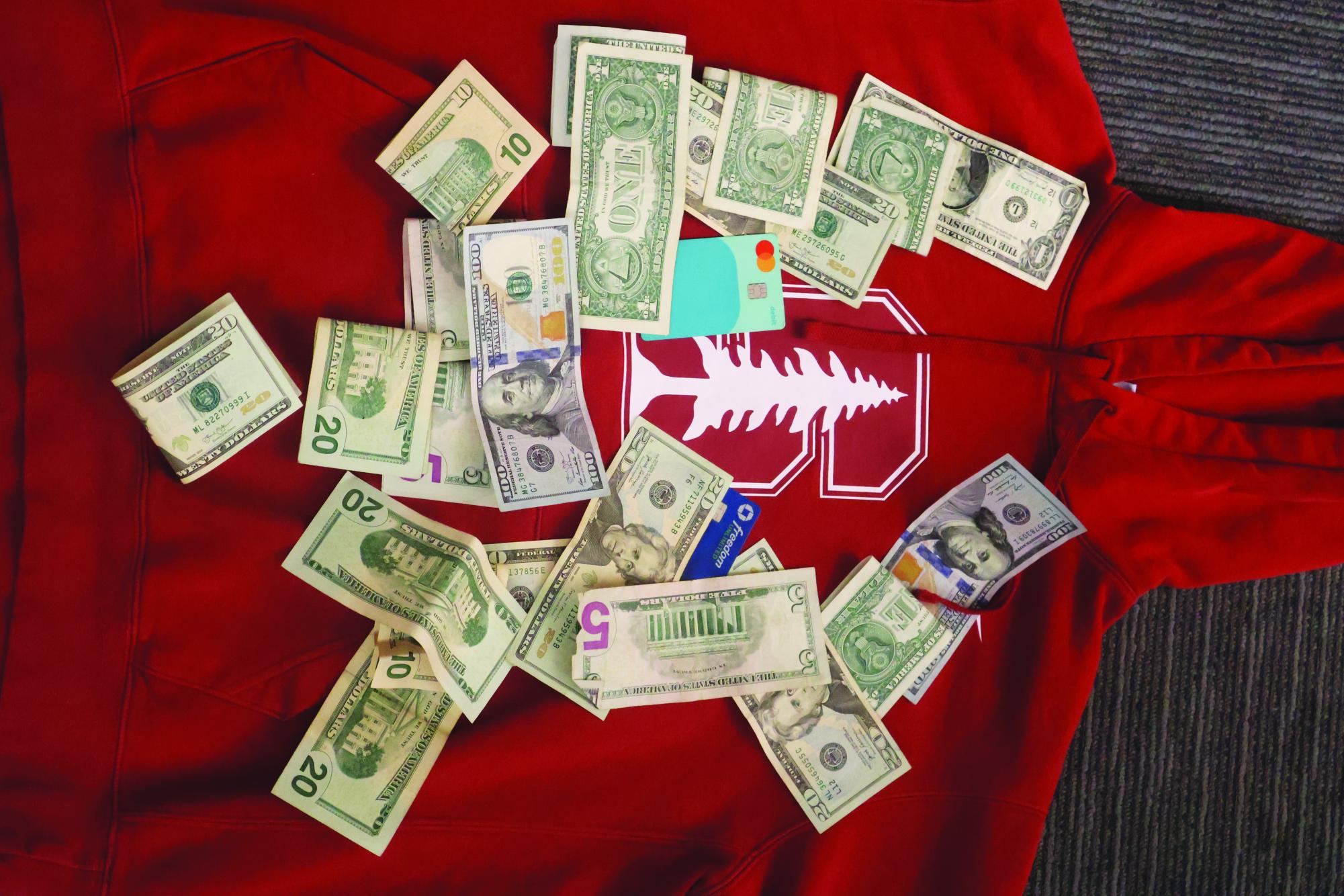
Recently, there has been a major uptrend in investment in college process advancement programs and systems for students to strengthen their collegiate application profiles. These programs promise admission to “top schools,” sometimes fetching a price up to $30,000 for exclusive, one-on-one or board-style tutoring and counseling to students and families. Foremost among these is Crimson Education, a counseling board driven program with tuition up to $40,000.
For junior Rohan Tare, a Crimson Education user, the institution has been fundamental in making him a more well-rounded candidate for universities.
“My parents discovered it and then they brought it to me,” Tare said “Coming up with a plan of how I’m going to make myself as strong of an applicant for college as possible within three years is something really, really big and very important. So we thought: ‘Okay, if these people have access to all these resources and they have these stats showing that they’re really good at helping these students get into good colleges, then this might be something that worth doing.’”
The program has provided Tare with countless opportunities and advantages as he has navigated high school, from academic help to an advisor helping him put out a research paper on the biomechanics of rock climbing finger injuries in adolescents. Many critics of expensive college counselors espouse the idea that they encourage the pursuit of extracurriculars for the sake of looking good on an application, rather than having any actual passion for the subject. However, Tare rejects this, as he believes his counselors have helped him discover activities that he is passionate about.
“I definitely know a lot of people who make their goals in high school centered around the fact that something would look good on their resume,” Tare said, “But in terms of actually carrying it out, I think it’s good to flip it and think: ‘These are some things I’m interested in doing; how could I incorporate it into my resume?’”
Despite the expensive cost of outside counselors, Tare feels that the money his parents are contributing is worth the price.
“Because I’m spending a bunch of money, I get to have extra assistance,” Tare said. “I think to some extent, the more resources and money you put into something, the more you’ll get back out of it.”
The St. Mark’s College Counseling team realizes that many students do end up using outside counselors, and, often, outside advice conflicts with messages given by the school counselors. Rather than ignore this predicament, St. Mark’s encourages communication between counseling teams to ensure that students are not trapped in the middle.
“In terms of a family wanting an outside perspective, they are more than welcome to have that. However, college counseling at St.
Mark’s is all about the student, the individual student, to make sure that we have served the student in the family well,” Pulido said. “So if they are using an outside person, then let’s partner with that person to make sure that everyone’s on the same page and giving the same advice.”
At the same time, Pulido cautions that independent counselors lack the institutional familiarity that successfully shapes St. Mark’s-specific counseling strategies. The understanding of school-specific admissions history, teacher recommendations, and internal processes that the St. Mark’s counseling team possesses often plays a significant role in creating a strong college application.
“I don’t think an independent counselor is going to have that background and knowledge of what has happened specifically at St. Mark’s, which are things that we know as St. Mark’s college counselors,” Pulido said. “We know the nuances of the process for St. Mark’s specifically.”
Ultimately, Pulido believes balance is key for students that want to utilize multiple counselors in the college admissions journey.
“If the student works solely with an outside person, it gives us less time to engage with a student and to get to know them well in addition to writing a strong letter of recommendation,” Pulido said. “It’s important that he maintains a good equilibrium between the counselors he uses.”