In early September, a video of a confrontation between a student and a professor at Texas A&M University over gender-identity content in the course began recirculating.
Pressure increased on the university as politicians, including Texas Governor Greg Abbott, posted fiery condemnations on social media platforms like X.
Texas A&M later fired the professor and demoted two other officials.
However, even these punitive steps were not enough to calm the whirlwind of anger.
On Sept. 18, Texas A&M University President Mark A. Welsh III announced his resignation amid the controversy.
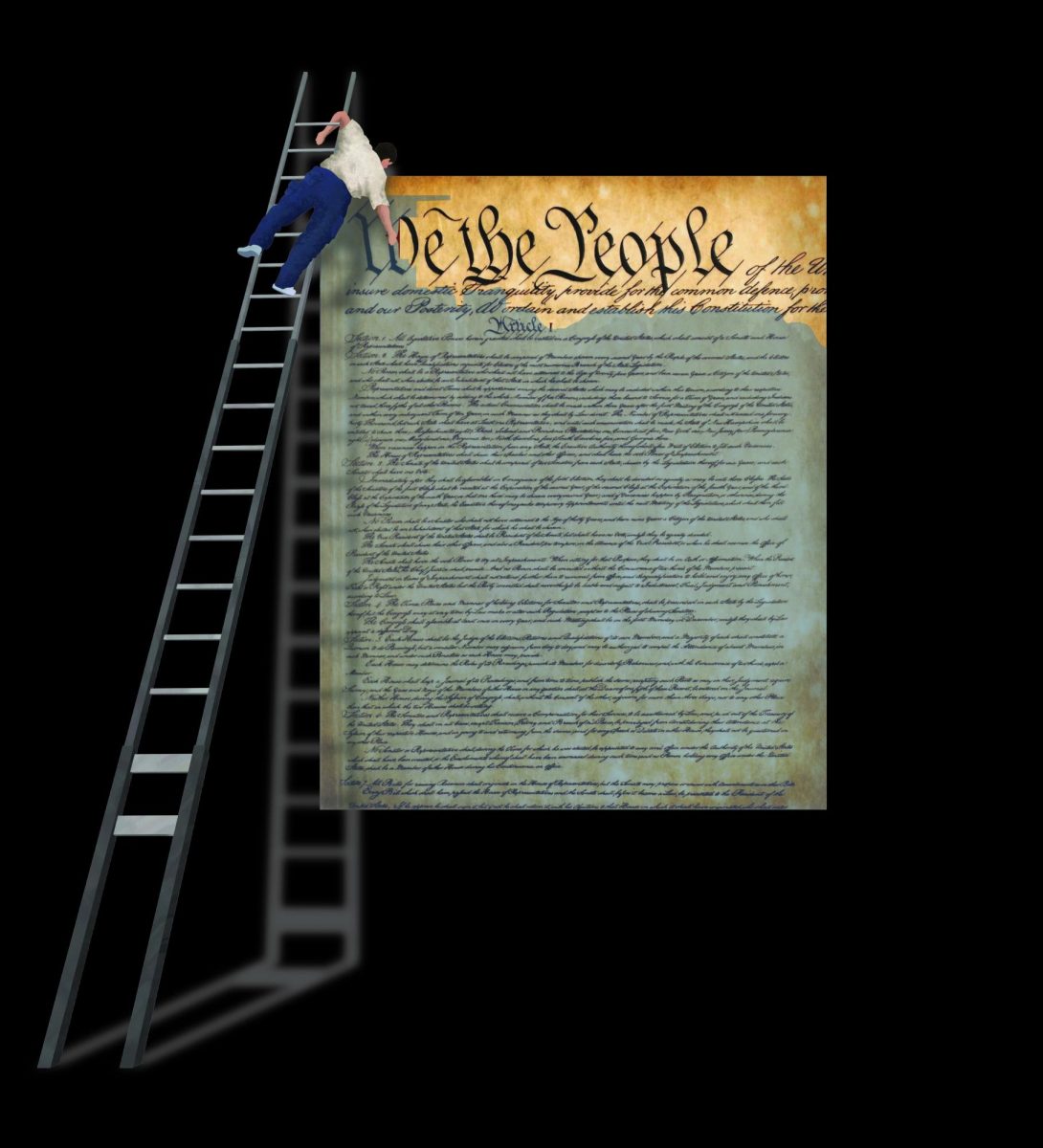
For many in the academic sphere, the turmoil at Texas A&M was just one recent example of political headwinds influencing the workings of higher education and threatening academic freedom. From local, state-level legislation to national pushes by the Department of Education, many scholars are now worried that academic freedom is being eroded.
Academic freedom is the right to teach, discuss and research without fear of censorship or punishment. This freedom has been enshrined in higher education for decades due to the view that the freedom of ideas on campus fosters effective discussion and therefore academic excellence.
“(Faculty) should be able to pursue the truth about their field without fear of governmental intervention, and the reason why that is important is because we want to make sure that the research and the teachings of the institution aren’t influenced in biased ways,” said Dr. Ashley Stone, a clinical associate professor at the Department of Education Policy and Leadership at the Southern Methodist University’s (SMU) Annette Caldwell Simmons School of Education and Human Development.
The purpose of maintaining academic freedom is to prevent scholars from being controlled by external influences and to allow for a free flow of ideas and information that can benefit society and the academic community. Additionally, the presence of a strong tradition of academic freedom allows for teachers to teach comfortably without fears of repercussions when covering controversial topics.
“At the maximalist level, I have the opinion that teachers at a public university should have as much freedom as they can possibly enjoy without necessarily indoctrinating or imposing a particular point of view on students,” History and Social Science Department Chair David Fisher said. “Students should hear different points of views. They can even be exposed to a teacher who has a single point of view, and as long as they aren’t penalized for not adopting that teacher’s point of view, I think it’s entirely appropriate for the teacher to express that. As a matter of educational philosophy, I don’t think we’re learning anything unless we’re actually challenged to examine our viewpoints.”
Public schools have always faced more state-level restrictions on what can be taught, while academic freedom tends to be much broader at institutions of higher education — though many are now raising alarms about a decrease of academic freedom at universities due to certain state-level legislation and national policy agendas.
“When we’re thinking about limitations on faculty members and higher education for many of them, it’s not just about what they’re teaching in their classrooms, but it’s also about the research that they’re able to pursue, how that moves their field forward, and that ultimately does also influence their teaching,” Stone said. “Whereas at K-12 level, there’s a little bit more consistency in what the state has determined that the curriculum needs to be.”
The situation at Texas A&M highlighted how public, politically motivated pressure can threaten the careers of educators in higher education, potentially causing other professors to be more cautious with what topics they cover. The high-profile and rapid eruption of the situation could also leave some professors in fear of teaching parts of their courses that may be politically sensitive, leaving important knowledge gaps.
“The biggest concern is that one short video clip cost someone their job, one person officially, and two more people were removed from administrative positions, and then ultimately the president stepped down in the wake of all of this,” Stone said. “I think that sends a scary message.”
For many professors, the controversy paints a bleak picture for academic freedom, one where instructors must carefully teach long-standing courses to avoid contentious topics.
“Yes, it harms that person who lost their job, but it harms our students,” Stone said. “It harms the institution, and I think (that) if those things are harmed, it ultimately harms our state. That means that those who are coming through (and) graduating, who are doing all those things are going to lose value.”
Individual states have control over their public universities through funding and legislation, though most universities have internal governance systems as well — ideally, these two “governing bodies” should be balanced in their abilities to support and control institutions. Recently, however, there have been more examples of state governments using legislation to intervene in the public school system in ways regarding curriculum, hiring and other facets of university operation. A new Texas bill serves as just one local example of this trend.
Texas Senate Bill 37, passed over the summer, came into effect Sept. 1 of this year. The bill increases the power of university governing boards at public universities, which are appointed by the governor, in making decisions about hiring and curriculum, and also decreases the power of faculty senates, among other things. Specifically, the new law gives the politically appointed governing board ultimate authority over curriculum changes. The main criticism of this legislation is that it increases political control over public universities, which could be seen as a challenge to academic freedom.
“I think a part of why people are concerned is because of the ways in which they’ve seen the legislature intervene into classrooms and the review of curriculum and syllabi in ways that are counter to what the field would consider best practices, and if that’s going to be the way that they implement the program, then it does severely limit academic freedom,” Stone said.
On a national level, the Department of Education is able to leverage its power to allocate financial rewards to promote programs and ideologies that it finds to be in the best interests of the nation. Recently, the Department has made rapid moves to create initiatives to promote “patriotic education” across the country, specifically regarding the subject of American history. Some have taken a cynical view of this approach, seeing this push by the Department as a way to control the historical narrative of the country and choke out dissent by financial means.
A rule proposed by the Department of Education on Sept. 17, 2025 describes creating a new priority that “focuses grant funds on programs that promote a patriotic education that cultivates citizen competency and informed patriotism.”
The same day, the Department of the Education announced the launch of the America 250 Civics Education Coalition, a coalition led by the America First Policy institute along with 40 other conservative organizations, including Turning Point USA and the Heritage Foundation. The coalition’s stated goal is to ”spearhead nationwide initiatives to engage students, educators, and communities in conversations about liberty, citizenship, and America’s enduring values” in the leadup to America’s 250th birthday. On Sept. 29, the Department of Education announced a new $153 million in grants through the American History and Civics Seminars Program, bringing the previous total of $7 million to $160 million. The program will be awarding grants towards programs promoting American history and civics education.
The president and the Department of Education have largely framed their pushes to promote civics education as a way to develop a patriotic citizenry and commemorate the greatness of America in the leadup to the nation’s 250th birthday. Opponents claim that these efforts are part of a larger campaign to sanitize American history, citing past executive orders and actions — including the executive order “Restoring Truth and Sanity to American History” and his efforts to remove certain exhibits from Smithsonian museums — as examples of this “purge.”
“The concern with ‘patriotic education’ as it has been discussed in the current administration is that they want to limit people from being able to teach the truth about history, and if we don’t teach a complete history, then we’re doomed to repeat the mistakes we’ve made previously,” Stone said. “We’re doomed to repeat the harms that we’ve previously done rather than to learn from them, and I think that it’s really important that we’re being honest about the whole picture of the United States, the good and the bad, so that we can consider what are the best ways to move forward.”
Many critics of recent actions by the administration involving “patriotic education” point out that the America 250 Civics Education Coalition is entirely composed of conservative groups — though civics is not necessarily a partisan issue — and that “patriotic education” has an arbitrary definition. For some, these efforts represent an attempt by the national government to impose a certain ideology and view of history, threatening academic freedom by indirect means of monetary grants that universities may find vital and by promoting other partisan initiatives.
““If presented in a sort of abstract way — should public schools instruct their students in ‘patriotic virtues’ (and) respect for the Constitution, democracy and so forth — I don’t think anybody would object to (that education),” Fisher said. “I think the concern that people have right now is that the money is attached to what many might consider a Republican coded set of values.”
On a broader scale, the current administration has chosen to take universities head-on in an effort to widely reshape higher education in America, engaging in legal battles and coercion to push certain institutions one way or another. Federal influence in private and public universities raises pressing questions about academic freedom, which many fear would be at risk if institutions had to answer to the government.
The administration has recently gone after universities like Harvard and Columbia University for alleged wrongful admissions practices, DEI programs and antisemitism, among other things. Threats include the freezing of federal funding and research grants and other major punitive measures. Some universities, like Columbia, Brown and UPenn have ended up reaching settlements with the administration, making concessions to stop the persecution. A new effort by the administration has taken this approach of negotiating deals with universities a step further.
In early October, the Trump administration sent out letters to nine major universities offering them to join a “compact” that would give them an advantage in federal funding in exchange for agreeing to certain demands laid out by the administration as a part of a broader effort to reshape higher education.
“(The administration) would ask these institutions to sign, and that would influence who they could admit to learn, how they do their admission, some of their parts of their admissions processes, sort of doing all this in favor of getting preferential treatment in terms of federal funding,” Stone said. “It’s the federal government (offering) rather than a stick this time, a carrot: ‘Here is a financial incentive to align with what we want you to teach and what we want you to research and study.’”
This compact is a new kind of effort by the administration to change higher education, offering advantages in federal funding and a stronger, more direct relationship to the White House in exchange for caving to demands. These demands include a cap on international student admissions and an adherence to a stricter definition of gender and a requirement to remove institutions that “punish, belittle and even spark violence against conservative ideas.”
As of writing, six of the nine initial universities have denied the offer, including MIT, Brown, USC, UPenn, Dartmouth and UVA. Brown’s president sent a rejection letter to the White House stating a concern that “the Compact by its nature and by various provisions would restrict academic freedom and undermine the autonomy of Brown’s governance.” The president has also invited several other universities — specifically WashU, Kansas and ASU — to possibly join the compact and may extend more invitations in the future to other universities.
Many onlookers have slammed the compact deal as a way for the government to infiltrate the higher education sphere and exert unprecedented influence and have openly called for all universities to reject the offer.
In such a tumultuous landscape for academic freedom, with challenges at the state and national levels, students, teachers and researchers are uncertain about the future of higher education in the US. However, the tradition of academic freedom has had a long and storied history in this country, and many are still willing to defend it.
“If we can find better platforms to talk to people about why academic freedom is important, why understanding different ideologies is important, or (why) different perspectives on a topic are important, then I think we’ll end up in a good place,” Stone said. “But in the meantime, I think it’s going to be a hard fight.”